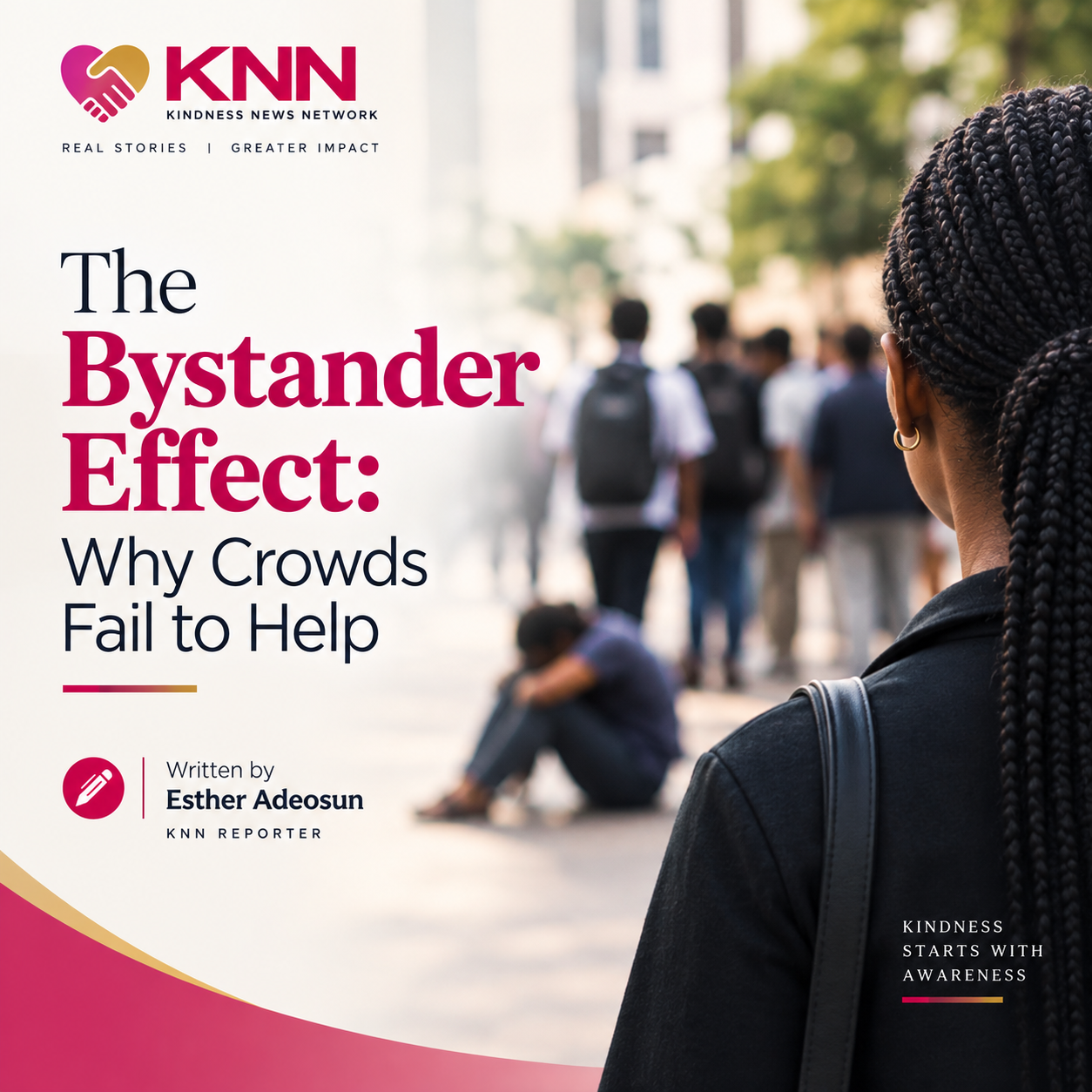

This week, a man stepped outside his home in visible distress and attempted to end his life. The people around him did not intervene. Some watched. Some laughed. When the first attempt did not succeed, he tried again, in front of them, and died there, surrounded by people who did nothing.
It is the kind of story that should stay uncomfortable, because it points to something larger than one crowd on one afternoon. It points to a standard most of us apply without ever examining it: we are often quicker to protect an animal from suffering than we are to protect a stranger from it.
An instinct we already have
Most people would not stand and watch, let alone laugh, if they saw a dog being hurt in the street. Something in most of us responds to visible animal suffering almost automatically, with an urge to help or at least to look away rather than watch it happen. We do not, as a rule, treat an injured animal as entertainment.
That instinct is worth noticing, because it proves something important: the capacity for this kind of compassion already exists in most people. It is not that we are incapable of responding to suffering with care. It is that we do not extend that same, already existing instinct evenly. A stranger in the worst moment of his life received a response that a suffering animal, in many of the same streets, likely would not have.
What decides who gets our compassion
If the instinct to help exists, the question worth sitting with is what determines when it activates and when it doesn’t. Part of the answer is unsettling in its simplicity: we tend to extend protective compassion most easily to whoever we have already decided is helpless, blameless, and unthreatening, an animal being the clearest example of all three at once.
A person in visible crisis rarely gets read the same way. Somewhere in the watching crowd, assumptions tend to form quickly: that he brought this on himself, that this is a private matter being made public, that intervening would be awkward or unwelcome, that this is a spectacle rather than an emergency. None of these assumptions has to be spoken aloud to do damage. They simply need to exist long enough to replace the instinct to help with the decision to watch instead.
The gap that should trouble us
The uncomfortable part of this is not that people are incapable of compassion. It is that compassion, left unexamined, is selective in ways that say more about the people withholding it than about whoever needed it. A dog in pain asks nothing of us except that we notice. A person in pain, especially a stranger, asks something harder: that we set aside our assumptions about who deserves help long enough to actually offer it.
That is a real cost, and it is worth naming honestly rather than pretending kindness toward strangers should come effortlessly. It doesn’t. But the man this week did not need our compassion to be effortless. He needed it to be extended at all, in the moment his life depended on it, to a person rather than only to a creature that could not have chosen to be there.
Where this leaves us
None of this is about judging the specific people in that crowd more harshly than they have already judged themselves, if they have. It is about recognising a pattern most of us are part of in smaller, less visible ways: the ease with which we protect what asks little of our assumptions, and the hesitation with which we protect what asks us to set them aside.
This month, we will look more closely at why that hesitation happens, what turns it into something worse, and what it actually takes to become the kind of person who moves toward someone else’s pain instead of away from it. It starts here, with an honest look at an instinct we already have, and the question of why we don’t offer it more freely to the people who need it most.
This piece discusses suicide. If you or someone you know is struggling, please reach out. In Nigeria, the SURPIN Helpline offers free, confidential support around the clock, and Mentally Aware Nigeria Initiative (MANI) also provides phone support.