
We all have a voice in our heads. It speaks to us when we mess up or fall short. This voice is often harsher than what we say to friends or family.
This self-criticism weakens us and stops us from learning. But, we can change this.
Being kind to yourself is not weak. It’s the key to achieving your goals. When you practice self-compassion, you treat yourself with kindness, just like you would a loved one.
This change in how you speak to yourself can transform your life.
Self-compassion means treating yourself with grace and understanding. It’s about accepting that struggles and failures are part of being human. By embracing self-compassion, you open up to growth, healing, and positive change.
This isn’t about settling for mediocrity. It’s about being honest and kind to yourself at the same time.
Studies show that self-compassion makes us resilient. People who are kind to themselves bounce back faster from setbacks. They learn more from their mistakes and feel less stressed.
Self-compassion is the secret to moving forward with strength and hope.
We can’t give kindness if we don’t have it for ourselves. When we practice self-compassion, we spread kindness. Our families, communities, and the world feel it. That’s why self-compassion is the first step to building the life and world we want.
Wherever you are right now is the perfect place to start. You don’t need to wait until you’re perfect. You can start practicing self-compassion today, just as you are.
Key Takeaways
- Self-criticism makes us weaker when facing failure, while self-compassion builds true resilience
- Being kind to yourself is the foundation for reaching your goals and helping others
- Self-compassion means treating yourself as you would treat a good friend
- The art of self-compassion is about meeting yourself with grace and understanding, not about being perfect
- When you practice self-care practices and self-compassion, you create positive ripple effects in your family and community
- You can start practicing self-compassion right now, exactly where you are in your life
Understanding Self-Compassion
Self-compassion is more than just being kind to yourself. It’s about treating yourself with understanding when things get tough. It’s about accepting yourself, even when you feel like you’ve failed.
We often think being hard on ourselves makes us stronger. But research by Dr. Kristin Neff shows that’s not true. Self-compassion actually helps us grow and become more resilient.
What is Self-Compassion?
Self-compassion has three main parts. Knowing these helps us practice it every day.
- Self-Kindness versus Self-Judgment: This means treating yourself like a good friend. When you make a mistake, be kind and understanding, not critical.
- Common Humanity versus Isolation: Seeing that everyone struggles and makes mistakes. You’re not alone in your imperfections.
- Mindfulness versus Overidentification: Watching your painful emotions without getting lost in them. Notice what’s happening without exaggerating or ignoring it.
Practicing self-compassion opens up space for growth. Instead of hating yourself after a mistake, acknowledge it, remember everyone struggles, and treat yourself with respect.
The Importance of Kindness to Self
Being kind to yourself isn’t selfish. It’s key for your mental health and well-being. People who are self-compassionate feel less anxious and depressed. They’re more optimistic and handle stress better.
Constantly criticizing yourself drains your energy. It makes you less patient and less motivated. Self-acceptance creates a positive cycle. You feel better, so you make healthier choices, which makes you feel even better.
| Self-Compassion Element | What It Looks Like | Real-Life Example |
|---|---|---|
| Self-Kindness | Treating yourself with warmth and care | Saying “It’s okay, you’re learning” after a mistake instead of “You’re stupid” |
| Common Humanity | Recognizing shared human struggle | Remembering that everyone misses deadlines sometimes, not just you |
| Mindfulness | Noticing difficult emotions without judgment | Observing sadness without letting it define your entire day |
More Than Just Self-Care
Self-compassion is more than just relaxing. It’s about how you talk to yourself when things are hard. It’s what you do when nobody’s watching and you’ve made a big mistake.
True self-compassion means treating yourself with respect, even when things go wrong. It’s about accepting your pain without judgment. It’s about responding to failures with understanding, not anger. This is where real healing and growth happen. Self-compassion benefits extend far beyond temporary relaxation. They transform your relationship with yourself, which ripples out into every area of your life.
The Psychological Benefits of Self-Compassion
Self-compassion changes our minds and bodies in amazing ways. Science proves that being kind to ourselves boosts our mental health. These benefits help us deal with stress, recover from setbacks, and enjoy life more.
Stress Reduction and Emotional Regulation
Self-compassion affects our nervous system deeply. When we’re kind to ourselves, our body releases oxytocin, the same hormone from hugs. This hormone calms us down and lowers anxiety.
But, being too hard on ourselves is different. Harsh self-criticism makes our brain think we’re in danger. This leads to stress hormones flooding our body, wearing us down emotionally.
Using self-compassion in mental health techniques helps us avoid this cycle. By choosing kindness over criticism, we calm our body naturally. This makes it easier to manage stress and regulate our emotions.
Increased Resilience
Many think we need to be tough on ourselves to succeed. But, research shows self-compassion makes us stronger after failure.
Being kind to ourselves after mistakes helps us learn faster. We see failures as chances to grow, not as personal failures. This mindset lets us try again without fear holding us back.
Self-compassion builds real resilience. We gain confidence from knowing we support ourselves through tough times, not from being perfect.
Enhanced Well-Being
Studies show self-compassionate people are happier and more optimistic. They’re curious about life and connect better with others. They also feel less anxious and depressed, and are more satisfied with life.
| Well-Being Indicators | Self-Compassionate People | Self-Critical People |
|---|---|---|
| Happiness Levels | Higher | Lower |
| Optimism | Increased | Decreased |
| Life Satisfaction | Strong | Weak |
| Anxiety Levels | Lower | Higher |
| Depression Risk | Reduced | Elevated |
| Curiosity About Life | Active | Limited |
These benefits create a strong foundation for a fulfilling life. Feeling good about ourselves makes us more present in our relationships and work. We take better care of our health and pursue our dreams with courage.
The beauty of self-compassion is that it doesn’t lead to narcissism or entitlement. Instead, it builds real confidence and care for ourselves and others. We become stronger, kinder versions of ourselves.
Practicing Self-Compassion Daily
We all face tough times that test our emotional strength. The good news is we can build resilience through self-care practices. By turning self-compassion into daily actions, we can use simple tools anywhere. Let’s explore how being kind to yourself becomes easier with concrete techniques for busy lives.
Simple Steps to Cultivate Kindness
Starting your self-compassion journey is easy. Just place your hand over your heart when you’re struggling. Take three deep breaths while acknowledging your pain. This calms your nervous system and reminds you that you deserve comfort.
Another approach asks you to think: What would I say to a friend experiencing this situation? Once you answer, offer those same compassionate words to yourself. This mental health technique shifts your inner voice from critic to cheerleader. When you make a mistake, instead of harsh judgment, you might say, “I’m human, and humans make mistakes” or “I messed up, and that’s okay.”

- Place your hand on your heart during difficult moments
- Practice three slow, deep breaths while breathing consciously
- Ask yourself what you’d tell a struggling friend
- Write down compassionate responses in a journal
- Speak kindly when you catch negative self-talk
Incorporating Mindfulness Practices
Mindfulness creates space between you and your painful thoughts. We can practice loving-kindness meditation for just five minutes daily, even during a lunch break or while waiting. This technique involves silently repeating compassionate phrases: “May I be safe. May I be healthy. May I be happy. May I live with ease.”
Body scan meditation helps us notice where we hold tension and offer those areas compassion. Start at your toes and slowly move your attention upward, breathing kindness into each body part. Many people find this cultivating self-love practice transforms how they relate to their bodies.
These mindfulness approaches support mental health techniques:
- Find a quiet space for five minutes
- Close your eyes and focus on your natural breathing
- Notice sensations without judgment
- Return attention gently when your mind wanders
- End by placing a hand on your heart
Creating Positive Affirmations
Affirmations work best when they feel real to you. We recommend using this formula: acknowledge your struggle, normalize it, then offer kindness. This approach aligns perfectly with cultivating self-love and being kind to yourself when life gets tough.
| When You’re Struggling With | Try This Affirmation | Why It Works |
|---|---|---|
| Making a mistake | “This is really hard right now, and it’s okay to struggle” | Acknowledges difficulty while showing self-compassion |
| Self-doubt | “Everyone makes mistakes—I’m learning and growing” | Normalizes imperfection and emphasizes growth |
| Self-criticism | “I deserve kindness, even from myself” | Redirects your inner voice toward support |
| Feeling overwhelmed | “I’m doing the best I can with what I have right now” | Acknowledges effort and realistic limitations |
Write your affirmations on sticky notes and place them where you’ll see them: your bathroom mirror, your car dashboard, or your phone lock screen. Repeat them during difficult moments. These self-care practices strengthen your mental health techniques by redirecting your thoughts toward support. Being kind to yourself through affirmations rewires how you respond to life’s challenges.
Overcoming Negative Self-Talk
Our inner voice greatly influences how we see ourselves and the world. When it’s critical and harsh, it can harm our mental health and block self-acceptance. Many of us face constant self-criticism without seeing its harm. But, we can learn to spot these patterns, challenge them, and replace them with kinder self-talk.
Recognizing Harmful Thought Patterns
Starting to practice self-compassion begins with noticing our inner critic. Our negative thoughts often follow predictable patterns. Many find that tracking their critical thoughts for a few days reveals how often they occur.
Common harmful thought patterns include:
- Catastrophizing – turning small mistakes into huge failures (“I always mess everything up”)
- Personalization – blaming ourselves for things outside our control (“It’s all my fault”)
- Overgeneralization – making one bad experience mean everything is bad (“I never do anything right”)
- All-or-nothing thinking – seeing situations as completely good or completely bad with no middle ground
When we catch ourselves in these patterns, our brain goes into a “threat state.” This triggers fight-or-flight responses, leading to anxiety and depression. Spotting these patterns is the first step to break this cycle. Try to notice what triggers your critical voice. Is it a specific situation, time of day, or type of task?
Techniques for Challenging Negativity
Once we spot harmful thoughts, we can question them using practical strategies. These techniques help us examine whether our self-criticism is true or just our inner critic talking.
Here are powerful methods to challenge negative thinking:
| Technique | How It Works | Example |
|---|---|---|
| Evidence Method | Ask what proof supports this thought and what contradicts it | Thought: “I’m bad at my job.” Evidence for: One mistake last week. Evidence against: Positive feedback from my boss, successfully completed projects. |
| Friend Perspective | Imagine what a caring friend would say about your situation | Instead of “I’m stupid,” ask: “Would my best friend call me stupid for making one mistake?” |
| Should Statement Awareness | Transform rigid “should” statements into compassionate observations | Change “I should be better at this” to “I’m learning and growing at my own pace.” |
These strategies work because they help us see things more clearly. Examining our thoughts like a scientist shows us many harsh judgments aren’t true. This practice builds self-acceptance by showing we’re unfairly critical.
Replacing Negativity with Positivity
Building self-acceptance doesn’t mean ignoring problems. It means speaking to ourselves with kindness while staying truthful. Balanced, compassionate self-talk acknowledges difficulty while supporting us.
When a negative thought appears, we can practice generating compassionate alternatives:
- Write down the harsh thought
- Ask: “Is this thought 100% true?”
- Create two kind alternatives that are also honest
- Choose the response that feels supportive and real
Original thought: “I failed. I’m a complete failure.”
Compassionate reframe: “I didn’t get the result I wanted this time. This one experience doesn’t define my worth. I can learn from this and try again.”
These strategies and techniques change how we talk to ourselves. Practicing self-compassion in our internal dialogue reduces stress, builds resilience, and allows for genuine growth. Each time we catch a critical thought and replace it with something kinder and truer, we’re strengthening our ability to be our own best supporter.
The Role of Self-Compassion in Personal Health
Self-compassion does more than just make us feel better emotionally. It changes how our bodies work. Our minds and bodies are connected in a powerful way. Being kind to ourselves leads to real health improvements.
How we treat ourselves affects our nervous system. Harshness keeps it stressed. But kindness calms it down. This calmness helps our digestion and immune system.
Physical Health Benefits
Self-criticism keeps our body in survival mode. This means high stress hormones and a weak immune system. It also leads to inflammation, headaches, fatigue, and muscle tension.
Self-compassion turns on our healing mode. This helps our immune system, digestion, blood pressure, and sleep. It also helps our cells repair themselves.
Mental Health Advantages
Self-compassion is different from fighting hard against bad feelings. It teaches us to accept these feelings with kindness. Studies show it helps us bounce back faster from tough times.
It protects us from anxiety, depression, negative thoughts, and shame. It helps us handle our emotions better.
Connection to Healthy Lifestyle Choices
Being kind to ourselves leads to better health choices. Self-criticism can make us give up easily. But self-compassion helps us keep going.
Self-compassionate people are curious and open to change. They don’t judge themselves harshly. They make lasting changes, not just quick fixes.
| Self-Critical Approach | Self-Compassionate Approach |
|---|---|
| Skip one workout, quit the whole program | Miss a workout, plan the next one kindly |
| Eat unhealthy food, give up on nutrition | Enjoy food, return to balanced eating |
| Feel shame about health struggles | Recognize struggles are part of being human |
| Avoid doctor visits from embarrassment | Seek help with compassionate motivation |
Starting to love ourselves changes how we see health. We become our own supportive coaches. Self-compassion makes wellness feel sustainable and joyful.
Fostering Compassion in Relationships
Self-compassion unlocks a powerful force in our relationships. The kindness we show ourselves becomes the base for real connections. Studies show that self-compassion leads to more fulfilling relationships. It brings patience, understanding, and emotional availability to our loved ones.
Building self-acceptance opens up space for real engagement with others. This makes our relationships more authentic and meaningful.

Being Kind to Yourself to Support Others
We can’t pour from an empty cup. Criticizing ourselves and ignoring our needs drains our emotional resources. Being kind to ourselves is not selfish; it’s essential.
Elena, a social worker, experienced burnout from neglecting her own needs. She started practicing self-compassion and noticed a change. She had more patience with clients, more energy for family, and genuine compassion to share.
Our ability to care for others starts with self-care and self-compassion. We can only give what we have.
Encouraging Compassionate Conversations
Compassionate communication changes our relationships. Self-acceptance helps us approach tough talks with less defensiveness. We learn to listen without immediately trying to fix or judge others.
- Listen deeply to understand, not to respond
- Share your feelings without blame
- Receive feedback as information, not criticism
- Respond with patience and genuine curiosity
Building self-acceptance lets us receive feedback without taking it personally. We separate our worth from our mistakes, making room for honest talks.
Building Trust through Vulnerability
Self-compassion gives us the courage to be vulnerable. Accepting our imperfections lets us be our true selves, not perfect facades. Trust grows when we share our real struggles and fears.
A book club in Seattle found this to be true. They deepened their friendships by being vulnerable and sharing their real lives.
We see that self-compassion bridges personal healing and relational growth. It touches everyone we meet.
Self-Compassion and Community Support
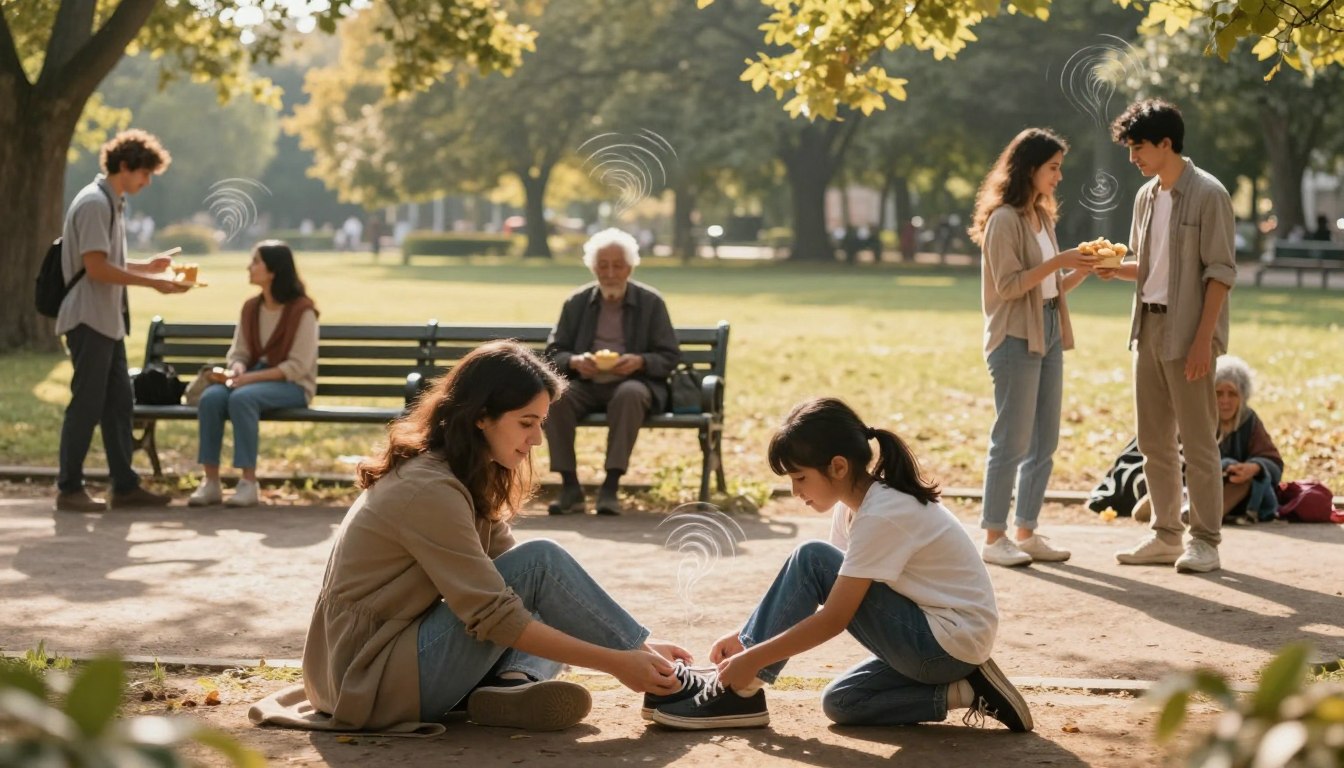
Self-compassion makes us stronger, not just for ourselves but for others too. Being kind to ourselves opens our hearts and minds to help others. This kindness spreads, touching everyone around us.
Learning to care for ourselves is not selfish. It’s the base for caring for others. As we grow in self-compassion, we find more energy and patience to help our friends and neighbors.
Helping Neighbors with Kindness
Being gentle with ourselves makes us more aware of others’ needs. Self-compassion frees us from self-criticism, allowing us to notice when neighbors need help. Helping starts small but grows over time.
Here are some ways to support your community:
- Check on elderly neighbors during extreme weather
- Organize meal trains for families welcoming newborns or facing illness
- Start community gardens where people work and grow together
- Create neighborhood tool-sharing libraries
- Offer childcare swaps with other parents
Helping others becomes easier with self-compassion. We help without judgment, just as we treat ourselves with kindness.
Creating a Compassionate Network
Building a compassionate network means gathering people who support each other. Self-care grows when we’re with others who value vulnerability and growth.
Start or join groups that foster real connections:
- Walking groups where people share life updates
- Meditation or mindfulness circles focused on inner peace
- Monthly potlucks centered on authentic sharing
- Parent support groups with judgment-free conversations
- Book clubs discussing personal growth and wellness
These groups thrive because members practice kindness together. When we’re with people who value self-compassion, honesty feels safe.
Leading by Example in Your Community
We don’t have to be perfect to lead with compassion. Self-compassion shows us that being imperfect is powerful. When leaders and parents show kindness to themselves, they give others permission to be human too.
| Leadership Action | Community Impact |
|---|---|
| Acknowledge your mistakes openly | Others feel safe admitting their own errors |
| Speak kindly about yourself in front of others | People learn to treat themselves with respect |
| Celebrate effort over perfection | Community members focus on growth, not results |
| Practice visible self-care practices | Others prioritize their own wellness |
Embracing self-compassion creates safe spaces for everyone. Your willingness to be imperfect while being kind sets a positive example. This is true leadership.
Self-Compassion and Environmental Care
Practicing self-compassion leads to a surprising discovery: the kindness we show ourselves also extends to our planet. This connection is deeper than we think. Caring for Earth and ourselves comes from the same place of compassion. Both remind us of our connection and encourage us to act from love, not fear or guilt.
Many of us feel overwhelmed by environmental issues. We criticize ourselves for using plastic, driving too much, or not doing enough. This harsh self-criticism stops us from taking action. Self-compassion helps us stay engaged without getting burned out.
The Link Between Kindness and Sustainability
Approaching our environmental impact with kindness keeps us motivated. Think about the difference between feeling guilty for using plastic versus learning and doing what we can. The second mindset comes from self-love, which keeps us going long-term.
Self-compassion aids in making sustainable changes. It helps us face environmental challenges with resilience, not overwhelm. We’re more likely to stick with changes because we’re driven by care, not shame.
Personal Actions to Support the Planet
You don’t need to be perfect. Progress is more important than being flawless. Start with one small change that fits your life:
- Bring reusable bags to the store
- Reduce meat consumption one day each week
- Walk or bike for short trips instead of driving
- Start composting food scraps
- Buy secondhand items when possible
When we celebrate each small choice with self-compassion, we build momentum. These benefits extend beyond the environment, strengthening our mental health and overall well-being.
Community Initiatives for Environmental Compassion
Communities across America are coming together with environmental compassion:
| Community Initiative | How It Works | Impact |
|---|---|---|
| Neighborhood Composting Programs | Residents collect food scraps and yard waste for shared composting | Reduces landfill waste and creates nutrient-rich soil |
| Community Clean-Up Days | Volunteers gather to remove litter from parks and waterways | Beautifies spaces and builds neighborhood connection |
| Tool-Sharing Libraries | Neighbors borrow tools instead of buying new ones | Reduces consumption and strengthens relationships |
| Native Plant Exchanges | Gardeners share seeds and seedlings of native species | Supports local ecosystems and pollinators |
| Repair Cafés | Community members help each other fix broken items | Reduces waste and builds skills and trust |
These initiatives show us that environmental compassion grows when we work together. When we practice self-compassion in our environmental choices, we inspire others. Our communities get stronger, and our planet benefits from our collective care.
Long-Term Impacts of Self-Compassion
Practicing The Art of Self-Compassion changes us in big ways. It boosts our emotional intelligence and wisdom. This practice also helps us grow personally.
It makes a difference in our families, workplaces, schools, and communities. This change starts with us but affects many others in ways we can’t fully see.
Cultivating a Culture of Kindness
When parents are kind to themselves, their kids learn to be kind too. Studies show self-compassion can be passed down through generations. This breaks the cycle of harsh self-criticism.
Parents who practice self-compassion raise kids who are more resilient and empathetic. These kids are emotionally intelligent and better equipped to handle life’s challenges.
Schools across the country are taking notice. By teaching self-compassion to teachers, schools see better behavior and grades. Classrooms become safe spaces for students to learn and grow.
Workplaces also benefit from kindness. Companies that value compassion see happier employees and less burnout. Healthcare providers who practice self-compassion create healing environments for everyone.
Transforming Personal and Collective Mindsets
Changing ourselves can change the world. Self-compassion challenges the idea that we must be perfect all the time. It shows that our worth isn’t tied to our achievements.
This change spreads through families, neighborhoods, and workplaces. Real people experience deep shifts:
- Business leaders focus on employee well-being
- Athletes speak out for mental health
- Grandparents break patterns of criticism
- Teachers create classrooms that value self-acceptance
Ripple Effects in Society
Self-compassionate people tackle big issues better. They face challenges without judgment. This lets them work towards change.
| Personal Practice | Community Impact | Societal Outcome |
|---|---|---|
| Cultivating self-love | Families become more supportive | Reduced cycles of trauma |
| Building self-acceptance | Workplaces value employee wellness | Decreased burnout and anxiety |
| Practicing positive mindset strategies | Communities support vulnerable members | Increased social cohesion |
| Embracing The Art of Self-Compassion | Collective care for the planet grows | Environmental consciousness rises |
We create the world we want by starting with kindness to ourselves. This kindness spreads to build communities where everyone is valued. We support each other and care for our planet together.
Kindness Challenge: Your First Step
We’ve talked a lot about self-compassion. Now, it’s time to take action. Being kind to yourself is not just a thought. It’s something you do every day. Today, we invite you to join a real challenge. This challenge will show you how self-care can change your life in just three minutes.
Self-compassion starts with one small step. That step is yours to take right now.
A Simple Act of Kindness Today
Here’s your challenge: Set a timer for three minutes. Find a quiet, comfortable spot. Place your hand on your heart.
Speak to yourself with care, as if you were talking to someone you love who is struggling. You might say: “This is hard right now. I’m doing my best. I deserve kindness and patience.” Notice what feelings come up. Do not judge them. Just observe.
Three minutes. That’s all it takes to start growing through self-compassion.
This short practice matters. Change often starts with tiny shifts in how we think and feel. Before you start, notice your mood. After you finish, notice it again. You may be surprised at what shifts.
Being kind to yourself is an act of strength, not weakness. Your three minutes of self-compassion today can open a door you did not know existed.
Reflecting on Your Kindness Journey
After your challenge, sit with these questions. You can write in a journal or simply think about them. What would change in my life if I spoke to myself with kindness every day? What am I afraid might happen if I treat myself with compassion? What becomes possible when I see myself as worthy of care?
Self-compassion is a practice, not a finish line. Some days it will feel natural. Other days it will feel hard. Both are okay. We want you to approach this journey with curiosity, not with judgment of yourself.
Sharing Your Experience with Others
We encourage you to share what you learn. Tell a friend about this kindness challenge. Post about your self-care practices on social media. Show others what being kind to yourself looks like.
When we share our journey, we give permission to others to start theirs. Your kindness spreads. Every time you practice self-compassion, you send a message to the world: We are worthy of care.
Every act of self-compassion is an act of power. It says no to the voices that tell us we are never good enough. It says yes to who we truly are. By being kind to yourself, you take the first step toward real change. You become fully, authentically, compassionately human. This is how we change the world. One kind moment at a time. Start your three-minute challenge today. Your life depends on it.