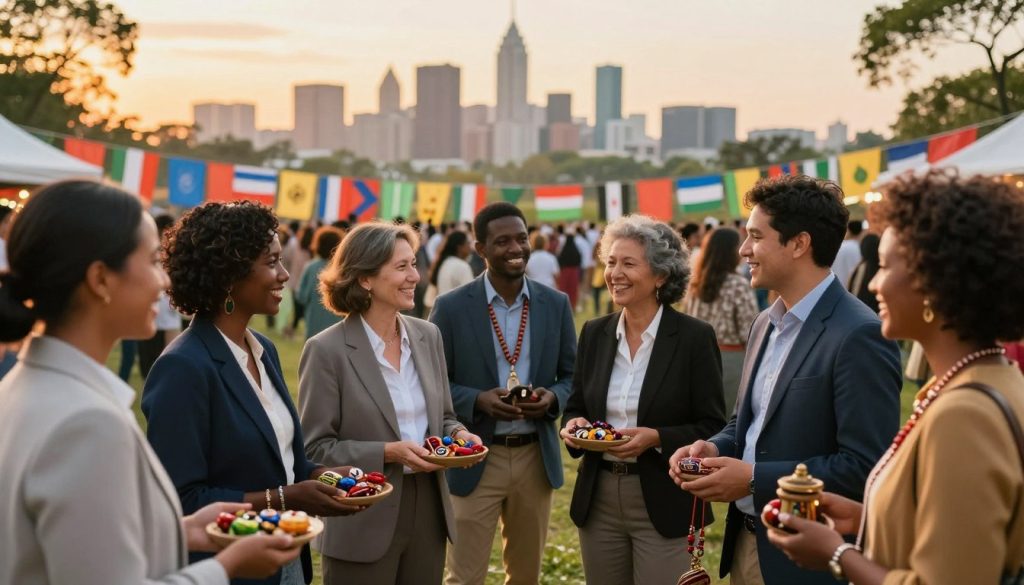
We live in a world where differences often divide us. Yet, every day, ordinary people choose connection over separation. They reach across cultural boundaries with open hearts. They listen to stories different from their own. These acts of global kindness reshape communities and remind us what we share.
Imagine your neighbor speaks a different language. Their traditions feel unfamiliar. Their food smells new. What if we approached these differences with curiosity instead of caution? What if we saw them as invitations to grow? This is where bridging cultures begins. It starts not with grand gestures but with genuine interest in another person’s world.
We’re inviting you on a journey of transformation. Bridging cultures and creating world harmony doesn’t require special training or expertise. It requires an open mind and a willing heart. Research on relational empathy shows us that connection grows when we step into someone else’s experience. When we recognize their world as valid and meaningful. When we listen without judgment.
The “Be Fantastic” philosophy lives here. It rests on a simple belief: every person has power to contribute to global kindness through daily choices. Through how we treat the person next to us. Through how we speak about those different from ourselves. Through small acts that ripple outward.
We’ve watched communities transform when people choose empathy. When a neighborhood crisis brought together families from India, Mexico, Somalia, and Vietnam, they didn’t focus on what made them different. They focused on helping each other. That’s when harmony emerged.
Throughout this article, we’ll share practical strategies for spreading global kindness. We’ll show you how empathy becomes an active practice. We’ll celebrate real stories of people like you who decided to build bridges. By the end, you’ll see that creating world harmony is not a distant dream. It’s something we can do right now.
Key Takeaways
- Global kindness starts with genuine curiosity about people different from us
- Bridging cultures means stepping into someone else’s experience with an open heart
- Relational empathy is an active practice we can develop and strengthen daily
- Small acts of understanding create ripple effects in our communities
- Every person has the power to contribute to creating world harmony through their choices
- Connection grows when we suspend judgment and recognize our shared humanity
Embracing the “Be Fantastic” Philosophy
The world kindness initiative is simple yet powerful. It’s about being our best selves in every interaction. It’s not about being perfect or making big gestures. It’s about being genuine, putting in effort, and treating others with kindness and respect.
When we follow this philosophy, we spread positivity. This positivity changes our relationships and communities for the better.
This initiative is about kindness without limits. It encourages us to listen deeply, act with compassion, and understand that our choices matter. Together, we can build a more harmonious world.
What Does “Be Fantastic” Mean?
Being fantastic is about living every day with purpose. It means showing real interest in people who are different from us. It’s about listening carefully and understanding others’ unique experiences and values.
This philosophy has three key parts:
- Listening with the goal of understanding, not judging
- Acting with compassion and respect for all cultures
- Knowing that small acts of kindness can strengthen our communities
It teaches us that being fantastic doesn’t need special talents. It’s about being aware, making an effort, and learning from those around us.
Why Kindness Matters
Studies show kindness has real benefits. It lowers stress for both the giver and receiver. It makes relationships stronger, improves health, and builds trust.
Here are some key benefits:
| Impact Area | Positive Outcomes | Who Benefits |
|---|---|---|
| Mental Health | Less anxiety and depression, more happiness | Givers and receivers |
| Physical Health | Lower blood pressure, better immune function | Those who practice kindness |
| Community Trust | Stronger bonds, less conflict | Whole neighborhoods and groups |
| Cultural Understanding | Brotherhood, more respect for differences | Diverse people |
By joining the world kindness initiative, we do more than just help ourselves. We help connect our communities with kindness and understanding.
Real-Life Examples of Kindness
Everyday people show us what it means to be fantastic. Their stories of kindness change communities.
A grocery store owner in Detroit made a big difference. He learned Arabic to welcome Syrian families. His small gestures made them feel valued in their new home.
A teacher in Los Angeles organized a “culture share” day. Students from different backgrounds shared games, foods, and traditions. This brought them together, breaking down barriers.
A healthcare worker in a big hospital went the extra mile. She learned about her patient’s cultural views on illness. This understanding built trust and respect.
“Kindness is the language which the deaf can hear and the blind can see.” – Mark Twain
These stories show the world kindness initiative is real and happening now. It’s waiting for more of us to join and make kindness a part of who we are.
The Power of Empathy in Everyday Life
Empathy connects us all. When we see things from another’s point of view, we start to understand their world. This understanding is even more powerful when we do it across cultural lines.
By practicing empathy, we can change our communities and workplaces. We don’t need special training. All we need is to really listen and care about what others say.
Listening to Understand
True listening is more than just hearing words. It’s about understanding the emotions and context behind what someone says. When we listen actively, we show respect for their experience.
Here are some simple steps to start now:
- Keep open body language when someone speaks to us
- Ask clarifying questions without judgment—like “Help me understand what that experience was like for you?”
- Reflect back what we’ve heard to confirm understanding
- Pause before responding to truly absorb what someone has shared
- Question our own assumptions and recognize our cultural biases
- Make an effort to pronounce names correctly
By listening in this way, we help build understanding between cultures. A bus driver in Seattle greeted passengers in seven languages. This made everyone feel welcome.
Coworkers from different backgrounds learned to appreciate their differences. They found common ground by asking questions instead of making assumptions.
The Impact of Small Acts
Small acts of empathy can have a big impact. A neighbor helped a new immigrant family with their garden. This simple act turned into a friendship that bridged language barriers.
A kind smile or a patient explanation can also make a difference. These actions show we care and value others.
| Small Act of Empathy | Impact on Individuals | Community Effect |
|---|---|---|
| Learning greetings in multiple languages | People feel recognized and respected | Stronger sense of belonging for all |
| Asking questions before making assumptions | Misunderstandings decrease significantly | Better relationships across differences |
| Offering practical help to neighbors | Isolation decreases, confidence grows | Deeper community connections form |
| Pronouncing names correctly | Individuals feel valued and included | Culture of respect spreads widely |
We don’t need special skills to build understanding. We just need to pay attention to those around us. Empathy every day helps us create communities where everyone feels at home.
We build a culture of kindness that makes our neighborhoods safer and friendlier. Our actions add up to a world where everyone can thrive together.
Cultivating Personal Health Through Kindness
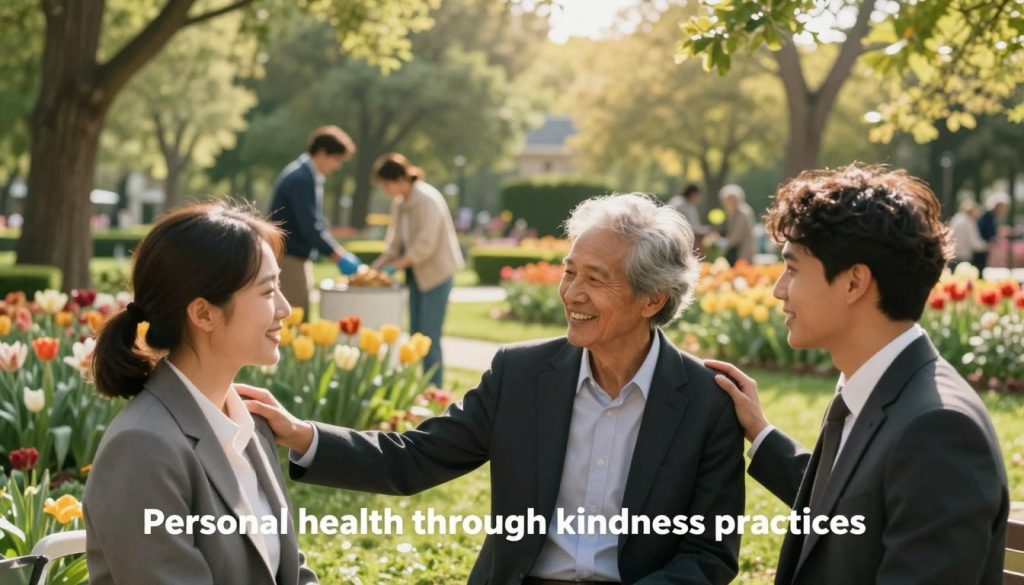
When we care for ourselves with kindness, we grow strong enough to help others. Our health is key to building a peaceful world. We can’t help others if we’re not well ourselves. This section shows how kindness can improve our health and help us understand different cultures better.
Practices That Promote Well-Being
Daily kindness practices boost our health and empathy. These steps make us stronger and more open to different views in our communities.
- Start each morning with gratitude journaling that includes appreciation for cultural diversity we encounter in our daily lives
- Practice mindfulness meditation focused on recognizing and releasing cultural biases that may limit our understanding
- Engage in regular self-reflection asking ourselves meaningful questions about how we showed up for others
- Take walks through diverse neighborhoods to expose ourselves to different cultures and perspectives
- Set healthy boundaries that prevent empathy fatigue while maintaining openness to others
A social worker in Houston found that morning meditation and evening reflection helped her work with refugee families. By focusing on connections, she became more effective.
How Kindness Affects Mental Health
Studies prove kindness is good for our minds. It makes us feel less stressed and more purposeful. Kindness also helps us feel connected, protecting us from loneliness and depression.
| Mental Health Benefit | How Kindness Delivers It | Community Impact |
|---|---|---|
| Reduced Anxiety and Stress | Acts of kindness activate the parasympathetic nervous system, promoting calm | Less reactive, more compassionate interactions with neighbors |
| Increased Sense of Purpose | Helping others gives our lives deeper meaning and direction | Stronger commitment to building a harmonious global community |
| Stronger Social Bonds | Kindness creates reciprocal connections that buffer against loneliness | More resilient neighborhoods with mutual support networks |
| Enhanced Emotional Resilience | Regular kindness practices build our capacity to handle challenges | Communities better equipped to navigate difficulties together |
In Portland, people from different backgrounds go on “kindness walks.” They help each other, compliment gardens, and pick up trash. People feel more connected and mentally stronger.
By focusing on our own health through kindness, we help our communities. Our well-being spreads out, making a positive impact on those around us.
Supporting Neighbors: Strengthening Community Bonds
We live in communities filled with diversity. Our neighbors come from different places, speak various languages, and celebrate unique traditions. Building strong connections across these differences creates cultural unity. When we support each other with kindness, we break down barriers and make everyone feel valued and included.
Research shows that trust grows through small acts of kindness. Open body postures, warm smiles, and genuine interest in others’ lives build bridges. We can start today by reaching out to those living near us, no matter their background or language.
Simple Ways to Help a Neighbor
We can strengthen cultural unity by taking action in our neighborhoods. Here are practical ways to support neighbors and build meaningful connections:
- Learn basic greetings in the languages spoken in your neighborhood using free translation tools
- Share homemade food or fresh produce with a welcoming note
- Offer practical help like shoveling snow, carrying groceries, or watching children
- Organize a neighborhood potluck where everyone brings dishes from their cultural traditions
- Create a neighborhood group online for sharing resources and help requests
- Make time for genuine conversations when you see neighbors outside
One Chicago family noticed their Ethiopian neighbors seemed isolated. They left a welcome basket with a note translated into Amharic and invited them to a backyard gathering. They asked questions about Ethiopian culture and shared their own Mexican traditions. This simple gesture sparked friendships that spread across the entire block, showing how individual kindness can transform neighborhoods.
Building Trust Through Kindness
Trust grows when we show up consistently for others. We demonstrate through our actions that we value our neighbors and respect their backgrounds. Reliability matters more than grand gestures. Being present when someone needs help, respecting their boundaries, and recognizing our shared humanity creates strong bonds.
A suburban Virginia community created a “neighbor helping neighbor” program using a shared app. Longtime residents and recent immigrants from various countries could request or offer help. The program succeeded because it was built on mutual respect and reciprocity. Everyone had something to offer, and everyone needed help sometimes. This approach fostered cultural unity by celebrating our interdependence.
When we recognize that we all need support at different times, we build communities where kindness flows in all directions.
We grow stronger when we invest in our neighbors. Through simple acts of kindness and genuine interest in one another, we create neighborhoods where cultural unity becomes our greatest strength. These connections ripple outward, inspiring others to reach across differences and discover the beauty in our diversity.
Caring for the Planet: A Shared Responsibility
When we work together to protect our planet, something amazing happens. Environmental action brings people from all walks of life closer. Our shared home connects us, no matter where we’re from or what we believe. By striving for sustainability, we’re not just saving Earth. We’re building harmony by seeing what truly unites us.
Protecting our environment means learning from each other’s cultures and traditions. Indigenous knowledge offers insights into living sustainably for centuries. Rural communities, immigrant families, and long-time residents all have valuable wisdom. By listening to each other’s views on sustainability, we build bridges across cultural lines.
Everyday Eco-Friendly Choices
Simple daily actions show our commitment to environmental care. Each choice we make affects our communities and the planet.
- Reduce food waste by learning preservation techniques from different cultures—pickling from Eastern European traditions, fermenting from Korean practices, or sun-drying from Indigenous methods
- Choose reusable items and repair what we own, following sustainable practices common worldwide
- Support local farmers and businesses, focusing on those run by immigrant and refugee communities
- Conserve water and energy through simple habit changes that fit your lifestyle
- Learn about environmental practices from different cultures in your community to discover fresh approaches
These choices are more than just protecting our environment. They’re about respecting sustainable living from diverse communities. When we adopt these practices, we honor the wisdom of many cultures.
Community Initiatives That Make a Difference
Real neighborhoods are showing us how environmental work brings people together. A community garden in Minneapolis brought together Hmong families, Somali refugees, and long-time residents. Hmong gardeners shared traditional companion planting methods. Somali participants contributed water-conservation techniques from their arid homeland. Local residents offered knowledge of growing conditions. This collaboration produced abundant food and deep friendships built on mutual respect.
| Community Program | Location | Cultural Exchange | Environmental Impact |
|---|---|---|---|
| Composting Initiative | Oakland | Learning waste-reduction practices from diverse cultural backgrounds | Reduced landfill waste significantly |
| River Restoration Project | San Antonio | Latino, Asian, and Anglo families working side-by-side | Waterway health improved |
| Community Solar Program | Rural North Carolina | Farmers of different backgrounds pooling resources | Renewable energy access expanded |
These initiatives show that caring for the environment fosters cultural connection. Recognizing Earth as our shared home helps us find common ground. Working together for sustainability shows us beyond differences to our shared future, creating harmony one community at a time.
Bridging Cultural Differences
We live in communities where people from many backgrounds live side by side. Bridging cultures means creating real connections across these differences. It starts with curiosity and a genuine desire to understand how others experience the world. When we approach cultural differences with respect and openness, we turn barriers into opportunities for friendship and growth.
Research shows that developing intercultural sensitivity happens in stages. We begin by appreciating our own culture. Then we move toward understanding and embracing the norms and perspectives of others. The key is intentional perspective-taking—actively working to see life through someone else’s eyes. This builds stronger communication and deeper relationships.
Celebrating Diversity in the Community
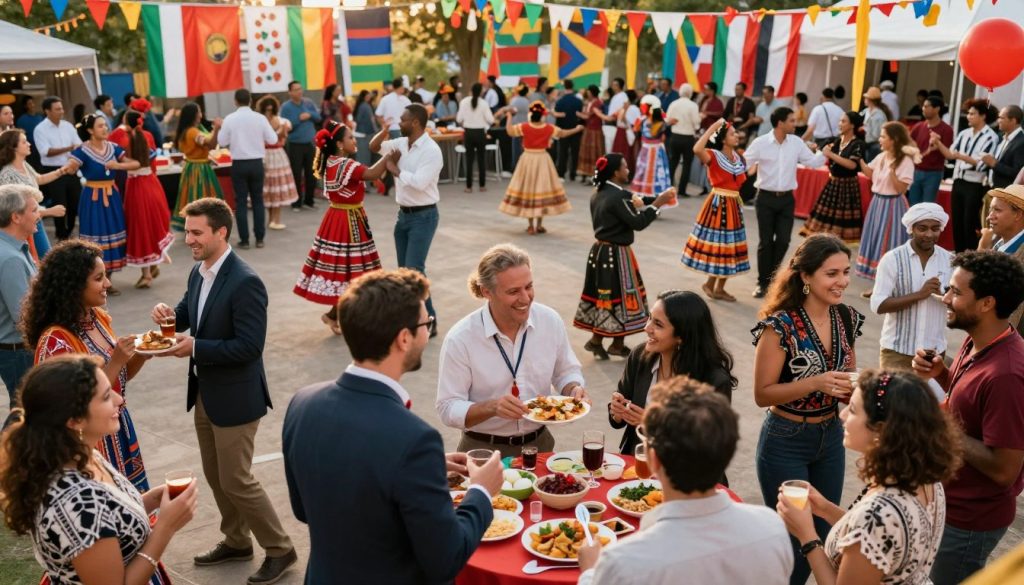
One of the best ways to practice bridging cultures is by actively participating in cultural celebrations around us. We can attend local festivals and events, even if we don’t know anyone there yet. This simple act shows respect and genuine interest in learning.
Here are practical ways we can celebrate diversity:
- Visit businesses owned by people from different cultural backgrounds and ask to learn their stories
- Attend cultural festivals, food fairs, and community celebrations happening in your area
- Participate in or organize cultural exchange events like international potlucks or language meetups
- Advocate for inclusive community spaces that welcome and represent diverse populations
- Support youth programs that bring children from different backgrounds together
When the Riverside Community Center in Denver shifted its focus to cultural inclusion, something remarkable happened. Monthly “Culture Celebration Saturdays” allowed different communities to share their heritage, food, music, and traditions. What began with modest attendance became the community’s most popular event. Families attended not just their own culture’s celebration but all of them, creating genuine friendships across groups that had previously been isolated from one another.
Learning from Different Perspectives
Bridging cultures requires us to genuinely listen and learn from perspectives different from our own. This means asking open questions like “What has your experience been?” instead of making assumptions about people’s lives.
We can expand our understanding by:
- Reading books and watching films created by people from different cultures
- Following diverse voices on social media and in news sources
- Practicing cultural humility—admitting we can’t fully understand another’s culture but can always learn more
- Being willing to have our assumptions challenged and changed
- Asking questions with genuine curiosity instead of judgment
A business owner in Atlanta discovered that company policies were unintentionally excluding employees from certain backgrounds. Meetings scheduled during religious holidays and communication styles favoring Western norms created barriers. By genuinely listening to feedback and learning from different perspectives, he restructured policies to be more inclusive. This change improved employee satisfaction and brought fresh creativity to the workplace by welcoming more voices to problem-solving conversations.
Bridging cultures means honoring what makes each group unique while discovering the universal human experiences that connect us all. We share common hopes, challenges, and dreams across every culture. When we approach differences with warmth and respect, we build a stronger, more compassionate world.
Inspiring Acts of Global Kindness
Looking around the world, we find amazing stories of everyday heroes. These stories show us that promoting global peace starts with connecting with each other. Every act of kindness spreads far and wide, touching lives everywhere. We can all join in by learning from others and finding our own ways to help.
Stories That Move Us
Real stories inspire us more than anything. In Iceland, a community welcomed a Syrian refugee family. This kindness turned into something beautiful. The father opened a restaurant that became the heart of the community.
Neighbors gathered there, and friendships grew. Stereotypes dissolved. This act of kindness changed the town’s view of belonging and acceptance.
In Japan, students made care packages for the elderly during the pandemic. They included letters in many languages. These packages started pen-pal relationships across continents.
Lonely hearts found companionship, and young people learned about different cultures. Simple letters and care brought people together, promoting global peace.
Teachers in Kenya and the U.S. connected their classrooms through video calls. Students shared their lives, dreams, and challenges. Friendships formed, and assumptions disappeared.
Young people saw each other as equals, not stereotypes. This educational bridge helped promote global peace among the next generation.
In Germany, the “Refugee Welcome” movement showed the power of opening homes and hearts. Ordinary citizens hosted displaced families. Many relationships became lifelong bonds.
Fear turned into friendship, and difference became strength. This movement changed lives.
Creative Ways to Spread Kindness Worldwide
We don’t need big resources to make a difference. Simple actions can change the world:
- Join or start a postcard exchange connecting people across countries
- Support microloans through platforms like Kiva that help entrepreneurs globally
- Participate in online communities focused on cross-cultural exchange
- Organize fundraisers for international causes that matter to you
- Become a conversation partner for immigrants learning English
- Host international students or travelers through homestay programs
- Create art, music, or writing that celebrates cultural diversity
Promoting global peace doesn’t need grand gestures. It needs genuine human connection and seeing humanity in others. One relationship at a time, we build a more peaceful world.
Leveraging Technology for Kindness
Today, screens connect us worldwide. Digital tools help us build bridges between people and cultures. They let us support others and share resources in ways our grandparents couldn’t imagine. Using these tools with care creates a harmonious global community.
It’s important to go beyond just talking online. We need to listen to different voices and seek real connections. This effort leads to kindness that benefits many people.
Online Platforms for Supporting Others
Many platforms now connect people for meaningful exchanges. We can find apps and websites for cross-cultural connection and support.
- Language exchange apps like Tandem and HelloTalk pair people worldwide for conversation practice and friendship building
- Global giving platforms such as GlobalGiving and DonorsChoose let us fund specific projects in communities worldwide
- Virtual volunteer opportunities include translating for refugee organizations or tutoring students in under-resourced regions
- Social media communities focused on cross-cultural dialogue create spaces for respectful conversation and shared learning
- Video call platforms enable virtual cultural exchanges between classrooms, book clubs, and interest groups across borders
Elena from Ohio connected with an entrepreneur in Rwanda through a women’s business platform. Their friendship started with mentorship and grew into weekly video calls. They shared business strategies, family celebrations, and personal challenges. Their story shows how technology can bridge distances when we’re genuinely interested.
Virtual Acts of Kindness
Small digital actions can make a big difference in our global community.
| Virtual Kindness Action | What It Involves | Impact Level |
|---|---|---|
| Thoughtful Comments | Leave encouraging responses on posts from people sharing their cultural experiences or facing challenges | Immediate validation and connection |
| Amplify Voices | Share and promote content from underrepresented creators and communities | Wider reach for marginalized perspectives |
| Host Virtual Events | Organize online cooking classes, music sessions, or discussion groups featuring diverse cultures | Direct cultural exchange and learning |
| Send Messages | Reach out with appreciation to people doing good work in distant communities | Personal encouragement and recognition |
| Be an Upstander | Speak up against online harassment targeting marginalized cultural groups | Safety and inclusion for vulnerable people |
The “Kindness Pandemic” movement shows the power of digital kindness. Millions worldwide joined in, creating a positive change online.
“In an increasingly interconnected world, cross-cultural empathy becomes essential for building peaceful and just societies.”
We face challenges online, like missing nonverbal cues and people seeking validation. Not everyone has equal access to the internet.
Despite these challenges, using technology with purpose can be transformative. Ask yourself: Are you building bridges or walls? Do you seek real connection or just validation? These questions help us make a positive impact online.
Your Kindness Challenge: Make A Difference Today!
We are at a critical moment. What you’ve learned about empathy, community, and cultural connection can lead to action today. The path to global kindness and world harmony begins with a choice. Join our Kindness Challenge and help spread peace through real connections.
Small Steps Toward Global Harmony
We’ve created three challenges for different levels and lifestyles. Choose one that fits you best. Start small and see how your actions spread.
The Starter Challenge is for one day. Learn to say “hello” and “thank you” in a language you don’t know yet. Use these phrases with someone who speaks it. This simple act can create a strong connection.
The Intermediate Challenge lasts a week. Have a real conversation with someone from a different culture. Ask them about their experiences and traditions with curiosity. Listen without judgment. This builds empathy and understanding.
The Advanced Challenge is for a month. Organize a gathering with people from at least three different backgrounds. A shared meal or activity works well. Create a space for sharing stories and building relationships. This strengthens community bonds.
James, a retired teacher in Phoenix, started with basic Spanish phrases for his neighbors. He then hosted monthly culture cafés at his community center. These gatherings became a hit, turning his neighborhood into a diverse, tight-knit community. His story shows the impact of taking action.
Share Your Kindness Experience
Sharing your challenge experience is important. It keeps you accountable and inspires others to join in. Your story has the power to make a difference.
Post your experience on social media with relevant hashtags. Join online communities focused on cross-cultural kindness. Share with friends and family about what you’ve learned. Write in a journal to track your growth. Every story matters in building global kindness.
Remember, every act of kindness changes both the giver and receiver. It sends positive ripples through neighborhoods, transforming communities. Global harmony starts with us, with small choices to connect across differences. The world we dream of is built one conversation, one gesture, one moment of connection at a time. You have everything you need to start promoting global peace today. Will you accept the challenge?