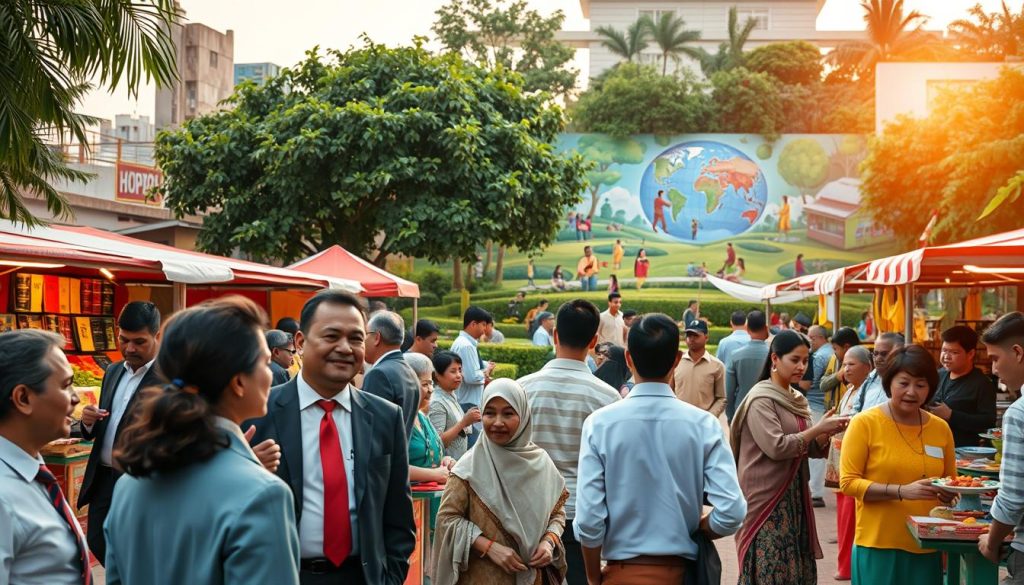
Ever felt like your actions don’t matter in a world of eight billion? Many of us think this way. We see big problems and wonder if our small choices count.
The truth is simple but powerful: they do. Our daily actions, like in our neighborhoods, ripple outward. We might not see the full impact, but it’s there.
Think of our community as a small version of the world. The kindness we show a neighbor is like what we wish for globally. Sustainable choices we make locally echo around the world.
This is the global village idea—a world so connected. What happens on our street affects lives far away. United Way has known this for decades. They show us that local donations and volunteer work help young people and improve health resources.
Organizations like Fulbright Canada show how this works. Their Community Action Program supports projects that strengthen neighborhoods. These projects bring people together and create change.
The 211 Day initiative is another example. Local helplines connect people to community solutions. Every call answered shows that local action matters globally.
We face a choice in how we respond to challenges. We can feel overwhelmed or believe our efforts don’t count. Or we can embrace the “Be Fantastic” philosophy. This approach recognizes our connection to each other and shows we can make a difference.
This article invites us on a journey. We’ll find ways to improve health, build communities, care for the environment, and spread kindness. We’ll learn how small gestures create big changes. We’ll meet people who are making a difference in their communities.
We’ll discover how to support local businesses, celebrate our differences, and volunteer together. Creating worldwide harmony isn’t about grand gestures. It’s about making conscious choices in our daily lives. It’s about recognizing our connection to something larger than ourselves. It starts with us, right here, in our own backyards.
Key Takeaways
- Our local actions create ripples that touch lives across the globe in the global village we all share.
- Organizations like United Way prove that community-focused work addresses real needs and creates pathways for change.
- The “Be Fantastic” philosophy is an accessible, optimistic approach to living that recognizes our interconnectedness.
- Small-scale volunteer projects and community initiatives can receive support and funding through programs like Fulbright Canada’s Community Action Program.
- Creating worldwide harmony doesn’t require grand gestures—it starts with daily, conscious choices in our own communities.
- We already have what we need to make a difference right where we live.
Understanding the “Be Fantastic” Philosophy
The “Be Fantastic” philosophy is about being our best selves every day. It’s not about being perfect or doing grand things. It’s about making choices that help us and those around us.
When we do this, we start to see how our actions affect others. This connects us to a bigger harmony through simple actions.
What Does It Mean to “Be Fantastic”?
Being fantastic means seeing our connection to each other. We do this by being present and kind. It’s about small things like smiling or choosing to walk.
These actions show we value kindness. Doing them often makes positivity normal.
Our actions shape the world. The Fulbright Canada Community Action Program shows how local actions can change things. Susan Hrach’s Seeds of Democracy project in Columbus, Georgia, is a great example.
It gave out cards, buttons, and seed packets with voter info. These simple items helped people think about their community.
Why Our Actions Matter
Every choice we make sends a message. Kindness or sustainable choices encourage others to do the same. This is called social contagion.
Your positive energy can spread far. What starts as a small action can grow big.
Take the Seeds of Democracy project again. One person’s idea touched many lives. It sparked conversations about community.
- Smiling at someone can brighten their entire day
- Choosing sustainable habits influences family members
- Volunteering inspires others to give back
- Listening fully to someone validates their experiences
- Supporting local businesses strengthens our community
How Positive Vibes Spread
Positive energy travels in waves. When we care and intend to help, people notice. They feel it and respond.
The Fulbright Community Action Program shows how working together can change things. It’s about collaboration and responsibility that goes beyond borders.
| Your Local Action | Immediate Impact | Ripple Effect |
|---|---|---|
| Practice kindness daily | Improves relationships with people around you | Others adopt kindness in their interactions |
| Support neighborhood businesses | Strengthens local economy | More people choose to shop locally |
| Volunteer in your community | Direct help for those in need | More volunteers step forward to serve |
| Make sustainable choices | Reduces your personal impact | Family and friends reconsider their habits |
| Listen actively to others | Builds deeper connections | Others feel valued and communicate better |
Worldwide harmony starts with local actions. Being fantastic in our daily lives plants seeds for change. We don’t need perfect conditions to start. We just need to show up with intention and a desire to improve our world.
Optimizing Personal Health for Global Good
Our health is more than just about us. When we take care of ourselves, we help our communities and the world. Our health choices let us volunteer and help others, making the world a better place.
Think of your health as a foundation. A strong foundation lets us build bigger and better things. When we neglect our wellbeing, everything becomes harder. But when we invest in simple, practical health habits, we unlock our true ability to help others and create positive change.
Simple Health Tips for Us
We don’t need expensive gym memberships or complicated diets to improve our health. Small, everyday choices create lasting results. Here are practical steps we can take right now:
- Drink more water throughout the day to stay energized and focused
- Take short walks during lunch breaks or after meals
- Practice deep breathing for just five minutes when stress builds up
- Set a consistent bedtime to get quality sleep each night
- Choose whole foods like fruits, vegetables, and grains when possible
- Stretch or move gently for ten minutes in the morning
These aren’t burdensome tasks. They’re acts of respect toward ourselves that prepare us to show up fully for the people we care about.
The Link Between Health and Happiness
Our physical health directly influences our emotional state and our capacity for kindness. When we sleep well, we’re more patient with our families and coworkers. When we move our bodies regularly, stress melts away and our minds become clearer. When we eat nutritious food, our mood stabilizes and we have energy for community engagement activities that matter.
United Way understands this connection deeply. Their work shows that access to nutritious food and quality health services enables people to lead healthy, purposeful lives. When our basic health needs are met, we can think beyond survival and focus on thriving alongside our neighbors.
Getting enough sleep, managing stress, and eating well aren’t luxuries—they’re the building blocks of resilience and happiness.
How Our Wellbeing Affects Others
Our health doesn’t exist in isolation. When we’re healthy, our families benefit from our patience and presence. Our workplaces benefit from our productivity and positive attitude. Our neighborhoods benefit from our energy and willingness to help.
The 211 helpline shows us how individual health challenges ripple through entire support networks. A person struggling with illness affects their family, friends, and community. The opposite is equally true: when we take care of ourselves, we strengthen everyone around us.
| When We’re Healthy | Global Impact We Create |
|---|---|
| We have energy to volunteer | Local organizations receive needed support |
| We feel emotionally balanced | Our families experience more patience and presence |
| We think more clearly | We solve community problems more effectively |
| We feel resilient | We can support others through their challenges |
| We model healthy choices | Children and neighbors adopt better habits |
Taking care of ourselves isn’t selfish. It’s essential service. When we optimize our personal health, we’re preparing ourselves to be reliable, present, and capable contributors to worldwide harmony. Every choice we make—every glass of water, every walk, every good night’s sleep—strengthens the entire web of relationships and communities we’re part of.
Building Stronger Neighborhood Connections
Our neighborhoods are where global harmony starts. Strengthening bonds with those nearby lays the groundwork for social cohesion. It turns streets into communities and strangers into friends. This section offers practical ways to build connections that feel natural and comfortable for everyone.
Easy Ways to Connect with Our Neighbors
Connecting with neighbors doesn’t need big plans or outgoing personalities. Small, consistent actions can make a big difference. Start with simple gestures that fit your comfort and daily routine.
- Smile and make eye contact during walks or while checking mail
- Learn your neighbors’ names and use them in conversation
- Leave friendly notes with homemade cookies or fresh garden vegetables
- Create a neighborhood directory or social media group for sharing updates
- Organize informal coffee meetups on weekend mornings
- Start a tool-sharing program for common household items
- Join or create a neighborhood walking group
Community engagement grows when we remove barriers to connection. You don’t need to host fancy events or commit a lot of time. Meaningful bonds form through small interactions that show we care.
The Power of Community Events
Organized gatherings create strong opportunities for social cohesion and collective action. These events bring people together around shared purposes and values.
In Edmonton, a community effort helped Ukrainian refugees. A 23,000 square-foot warehouse was donated. Volunteers helped collect and distribute furniture to newcomers. This initiative provided practical support and built genuine connections.
Your neighborhood can organize similar events:
| Event Type | Purpose | Frequency |
|---|---|---|
| Block parties | Build relationships and celebrate neighborhood unity | Seasonal or quarterly |
| Community clean-up days | Improve shared spaces and work toward common goals | Monthly or quarterly |
| Skill-sharing workshops | Learn from each other and build capability | Monthly |
| Neighborhood potlucks | Share food, stories, and cultural traditions | Monthly or seasonal |
| Seasonal celebrations | Honor holidays and mark time together | Annually |
These events don’t have to be expensive or elaborate. They just need space for people to gather and connect around something meaningful.
Celebrating Local Diversity
Our neighborhoods grow stronger when we appreciate and learn from our differences. Diversity adds richness, perspective, and resilience to communities.
The Edmonton furniture warehouse shows how welcoming newcomers enriches communities. Helping others adapt while learning about their cultures benefits everyone.
Celebrate your neighborhood’s diversity through:
- Organizing cultural food-sharing events where neighbors teach each other traditional recipes
- Creating opportunities to learn about different holidays and celebrations
- Supporting neighborhood businesses owned by diverse community members
- Establishing welcome committees that greet new residents with genuine warmth
- Hosting conversations about different traditions and perspectives
When we build social cohesion through community engagement, we practice global harmony. Your neighborhood becomes a microcosm of the global village—a place where inclusion, connection, and mutual support flourish.
Caring for Our Planet Together
Looking after our environment is a powerful way to show we care about the world. By choosing eco-friendly options, we help nature and build stronger communities. Plus, we create positive changes that spread far and wide. The best part is, we don’t have to make huge sacrifices. Simple, everyday habits can make a big difference.
Simple Eco-Friendly Habits
Starting to care for the environment can be as simple as making small changes in your daily life. These changes don’t need to cost a lot or change your whole life. Every little bit helps.
- Carry a reusable water bottle and shopping bags wherever you go
- Plan your meals to reduce food waste and start composting
- Choose products with minimal packaging
- Switch to LED light bulbs to save energy
- Unplug devices when you’re not using them
- Shop secondhand for clothing and furniture
- Reduce single-use plastics in your home
See these actions as mindful choices that reflect your values, not sacrifices. Begin with one or two changes and gradually add more. Remember, it’s the journey, not the destination, that matters.
Supporting Local Sustainability Initiatives
Real change happens when communities come together. In Hawaii, Kayla Marutani’s MINA program brought students from around the world to learn about environmental stewardship. They worked together to identify invasive plants and learned about indigenous land management.
Look for similar opportunities in your area:
- Join local conservation groups focused on protecting natural spaces
- Participate in community garden projects
- Volunteer for watershed protection initiatives
- Help organize park cleanup events
- Support organizations working on renewable energy solutions
These efforts create cross-cultural connection while tackling environmental challenges. Working together on sustainability strengthens our communities and builds lasting bonds.
Reducing Our Carbon Footprint, One Step at a Time
Lowering our environmental impact is a gradual process. Focus on actions that have the biggest impact:
| High-Impact Action | Easy First Step | Community Benefit |
|---|---|---|
| Reduce car trips | Walk or bike for nearby errands once per week | Cleaner air for everyone |
| Adjust home temperature | Lower thermostat by 2-3 degrees in winter | Lower energy demand |
| Choose local, seasonal food | Buy from farmers markets monthly | Supports local farmers |
| Eat less meat | Try Meatless Monday once per week | Reduces food production emissions |
| Support renewable energy | Switch to green energy plan if available | Transitions whole region to clean power |
Environmental stewardship is about making daily choices that show we care about the world. When we protect our planet, we protect all people who live here. Our actions make our neighborhoods and the world a better place, bringing us closer to the harmony we seek.
Acts of Kindness: A Ripple Effect
Kindness spreads fast. When we show kindness, others are more likely to do the same. This creates a chain of good deeds that strengthens our communities.
Small acts can change lives. They might seem insignificant, but they can make a huge difference.
Our neighborhoods grow stronger when we support each other. By understanding how kindness works, we can change our communities for the better.
Small Acts, Big Impacts
We don’t need special skills or lots of money to make a difference. Simple acts of kindness can have a big impact:
- Pay for the coffee of the person behind you in line
- Leave encouraging notes in library books or on car windshields
- Offer genuine compliments to service workers
- Help elderly neighbors with yard work or technology questions
- Donate blood to save lives
- Write thank-you notes to teachers and community helpers
- Share your skills through free tutoring or mentoring
- Give someone your full attention when they need to talk
These actions take just a few minutes but can last for years. They remind us that we’re not alone and that someone cares.
Inspiring Stories of Kindness
Real stories show the power of kindness. United Way’s 211 helpline connects people in need with help and support. The people working there know that listening can really help someone in crisis.
In Edmonton, a furniture warehouse project is making a big difference. The International Brotherhood of Boilermakers gave a huge space for free. Volunteers and community members donate furniture every week. They help Ukrainian refugees start new lives in Canada. It’s not just about furniture; it’s about showing people they belong.
Creating a Kindness Culture in Our Community
We can make our neighborhoods kinder places. Local actions shape our culture:
| Strategy | What It Does | Who Benefits |
|---|---|---|
| Kindness Boards | People post needs and offers of help | Neighbors find support and connection |
| Recognition Programs | Celebrate members who contribute positively | Everyone sees generosity rewarded |
| Random Acts Days | Organize community-wide kindness events | Whole neighborhoods feel the impact |
| Daily Modeling | Show consistent kindness in daily life | Friends and family catch the spirit |
When we work together to build kindness, we create stronger communities. We make places where people trust and support each other. This is how we start to build a more harmonious world, one neighborhood at a time.
The Power of Local Businesses
Choosing to support local businesses has a big impact. Every dollar we spend helps create jobs and boost our local economy. This support builds a stronger, more resilient society.
Local businesses are more than places to shop. They are where neighbors connect and real change starts.

Our shopping choices have a big effect. Supporting local entrepreneurs means investing in people who care about our community. They sponsor youth sports, donate to schools, and help out at community events.
This creates a positive cycle that makes our community stronger. It shows how our local choices can have a global impact.
Supporting Small Businesses in Our Area
Supporting local businesses is easy. We can start with small choices:
- Buy coffee from local cafes instead of chains
- Shop at farmers markets for fresh produce
- Visit independent bookstores for gifts and reading materials
- Use local service providers for home repairs and maintenance
- Dine at locally-owned restaurants with unique menus
Local businesses might cost a bit more. But the value is worth it. We get personalized service, unique products, and support for our neighbors.
To find local businesses, explore neighborhood commercial districts. Follow local social media, ask friends, and join “shop local” campaigns.
How Local Shopping Benefits Everyone
Money spent at local businesses stays in our community. Local business owners buy from other local suppliers, hire neighbors, and reinvest in our community. This creates more benefits than shopping at chain stores.
| Aspect of Impact | Local Businesses | Chain Stores |
|---|---|---|
| Money Circulation | Stays in community multiple times | Leaves community immediately |
| Job Creation | Employs local residents with personalized service | Limited local employment opportunities |
| Community Engagement | Sponsors events, teams, and local causes | Minimal local sponsorship involvement |
| Neighborhood Character | Creates unique, distinctive community identity | Standardized, uniform appearance |
| Relationship Building | Fosters personal connections and trust | Transaction-focused interactions |
Local businesses create spaces for community engagement. They become places where neighbors meet and community bonds grow. Every purchase is a vote for the community we want.
Collaborating with Businesses for Positive Change
Local businesses are great partners for positive change. Community engagement works best when businesses and residents work together. Real examples show this power.
The Fulbright Canada Community Action Program is a great example. Local coffee shops and businesses helped distribute civic engagement materials. They turned into centers for community participation, showing they care about our neighborhoods.
We can suggest partnership ideas to local businesses. Some ideas include:
- Hosting community events in business spaces
- Creating cause-marketing partnerships where purchases support local nonprofits
- Organizing business-sponsored volunteer days
- Developing mentorship programs connecting business owners with young entrepreneurs
Local businesses are eager for these partnerships. They strengthen customer relationships and show real community commitment. Supporting local businesses means investing in community connections and economic resilience. A strong local economy helps us focus on sustainability, education, and social justice.
Embracing Diversity and Inclusion
Our communities shine when we welcome everyone. Embracing diversity makes us stronger together. It helps us become better global citizens.
When we include others, we learn and grow. This helps us make a difference worldwide. Our choices and actions can bring harmony to our planet.
Celebrating Our Differences
Celebrating diversity means loving what makes us unique. It’s more than just accepting others. It’s about really getting to know them.
Here are some ways to celebrate our differences:
- Attend cultural festivals and events that represent different traditions
- Visit restaurants and shops owned by people from various backgrounds
- Learn basic phrases in languages spoken in our neighborhood
- Read books and watch films created by artists from different cultures
- Ask questions with sincere interest when encountering unfamiliar customs
- Teach children to embrace, not fear, differences
The imagineNATIVE Film + VR Tour celebrates diversity. It brings Indigenous-made media to Indigenous communities. This strengthens connections and enriches our experiences.
Building Inclusive Spaces in Our Communities
Creating inclusive spaces takes effort. We must look at physical and social barriers.
| Inclusion Strategy | Real-World Application |
|---|---|
| Ensure physical accessibility | Provide wheelchair ramps, accessible parking, and quiet spaces at community events |
| Address language barriers | Offer translations and materials in multiple languages spoken locally |
| Remove cost obstacles | Offer free or sliding-scale admission to community programs |
| Invite underrepresented voices | Actively recruit participation from groups not typically involved |
| Provide transportation support | Arrange shuttles or carpool coordination for community events |
The MINA program in Hawaii brought together students for environmental work. Andriy Tovstiuk’s project in Edmonton helped Ukrainian refugees. These show how we can support newcomers and build strong communities.
The Strength in Our Togetherness
Diversity makes our communities stronger. It helps us solve problems and make better decisions.
Inclusive communities are more resilient and adaptable. They can handle complex challenges better. Cross-cultural connections strengthen our community life in many ways.
Embracing diversity locally helps us become global citizens. When we listen and work together, we show the world how to cooperate. Our unity is essential for a better world.
Learning from Global Inspirations
We live in a world where ideas spread fast. Communities face similar challenges and share solutions. By looking at what works elsewhere, we get new ideas for our own places. This way, we don’t have to start from scratch. We can learn, adapt, and make a difference right where we are.
Real-Life Examples of Local Actions
Every day, community projects succeed in different places. These show us what’s possible when people work together to solve real problems.
In Edmonton, Andriy Tovstiuk helped Ukrainian refugees by collecting furniture. He used a donated warehouse and got 25-30 volunteers each week. This effort helped hundreds of families start anew.
Kayla Marutani’s MINA program in Hawaii brought students together for environmental work. This program helped students become committed to protecting the environment, making a global impact.
Michele Hurtubise’s media tour in Canada shared Indigenous stories, building cultural bridges. Susan Hrach’s Seeds of Democracy project gave out civic materials, encouraging democracy in her community.
How Global Movements Start Small
Every big movement starts with one person noticing a problem and acting. These stories show a simple pattern:
- Someone sees a real need in their community
- They take a practical step to address it
- More people join in with their skills
- The effort grows into something bigger
- Others learn and adapt it for their own places
International collaboration doesn’t always mean crossing borders. It’s about creating experiences that help people make a difference wherever they are. By using ideas from successful projects, we join a global exchange that strengthens communities everywhere.
Adapting Successful Ideas for Our Communities
We can use these inspiring examples in our own neighborhoods by understanding their core principles:
| Key Principle | How It Works | We Can Apply It By |
|---|---|---|
| Match resources with needs | Tovstiuk connected donated warehouse space with families needing furniture | Finding underutilized assets that could serve community members |
| Build partnerships | Hrach worked with local businesses and farms for her project | Connecting with existing organizations and community resources |
| Invite participation | All projects relied on volunteers sharing their time and talents | Creating opportunities for neighbors to contribute their skills |
| Stay flexible | Programs evolved based on community feedback and emerging needs | Remaining responsive as we learn what works best locally |
Start by looking at our communities with fresh eyes. What needs are there? What resources are not being used? Who has skills or assets to share? Answering these questions opens up possibilities for real change. We become part of a global network of change-makers, making a difference through local action.
Making Volunteering a Habit
Volunteering changes our lives and strengthens community ties. Regular service builds meaningful connections and addresses real needs. Making volunteering a habit is key, not just a one-time act.
Organizations like United Way show how consistent efforts make a big difference. They help young people achieve their goals and support communities facing challenges.
Starting to volunteer doesn’t need special skills or a lot of time. Many worry about where to start or if they’re qualified. But, most volunteer work needs willingness and reliability more than expertise.
Finding Opportunities to Give Back
Finding volunteer work that fits our interests and schedules is important. Think about what matters to us. Do we love animals? Consider local shelters. Do we value education? Explore tutoring programs.
There are many ways to find volunteer opportunities:
- Contact local United Way chapters for community-matched opportunities
- Search volunteer matching websites for roles fitting our skills
- Follow nonprofit social media accounts in our neighborhoods
- Ask librarians and community center staff about local needs
- Reach out to religious organizations with service programs
- Look for micro-volunteering options requiring just a few hours
Real projects show the variety of opportunities. Furniture warehouse programs coordinate 25-30 volunteers weekly, helping families and building friendships. Environmental programs engage students in conservation work. These examples show opportunities exist at every level.
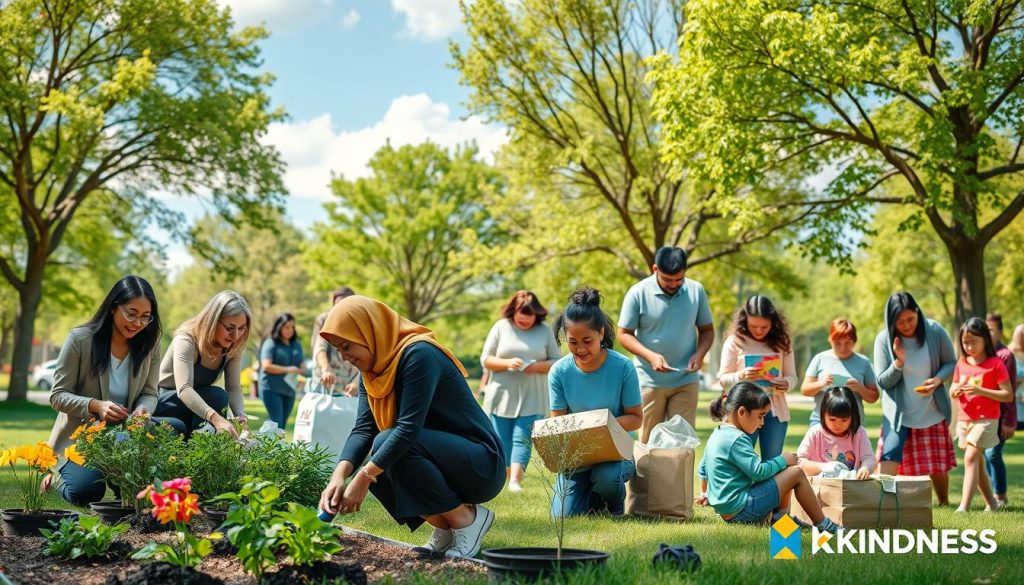
Benefits of Volunteering for Us and Others
Volunteering benefits both us and others. Recipients get essential services and human connection that paid staff can’t always provide. Our communities get stronger as volunteers bring diverse skills and perspectives.
We also gain personal rewards:
| Community Benefit | Personal Benefit |
|---|---|
| Fills service gaps in neighborhoods | Develops new skills and abilities |
| Provides meaningful human connection | Expands social networks and friendships |
| Brings diverse perspectives to organizations | Improves mental health through purpose |
| Strengthens worldwide harmony through unity | Builds empathy and life perspective |
Volunteers at furniture warehouses help families and form friendships across cultures. They learn about resilience and become more engaged community members. Volunteering is an investment in both others and ourselves.
Organizing Volunteer Events Together
Organizing volunteer events can multiply our impact. It builds leadership skills and fosters worldwide harmony through teamwork.
Here’s how to organize successful volunteer events:
- Identify a specific community need or partner with an organization
- Choose a date and clearly define the work scope
- Invite friends, family, and coworkers through personal outreach
- Coordinate logistics like tools, transportation, and refreshments
- Follow up with participants to celebrate impact and encourage future involvement
Start with small projects like neighborhood clean-ups or helping families in need. These projects build momentum and confidence. As we gain experience, we can expand our efforts. Consistent coordination creates sustained community engagement that transforms neighborhoods.
Making volunteering a habit opens pathways for personal growth and community transformation. Each volunteer action, multiplied across our communities, creates the foundation for worldwide harmony and collective resilience.
Our Kindness Challenge
We’ve learned how local actions help the world. Now, it’s time to act. We can all do one simple thing today. This action can make a big difference.
We don’t need a lot to make a change. We just need to choose and act. This moment is special because we can all make a difference.
A Simple Action We Can Take Today
Choose something that means a lot to you. You could say hello to a neighbor or help them out. A small act can make a big difference.
Try something new today. Pay for someone’s coffee or leave a kind note. You could also help out at a local event or learn about a different culture.
What’s important is that you do something. Susan Hrach’s Seeds of Democracy project shows us how small actions can grow. Your action today can make a big impact tomorrow.
Encouraging Others to Join Us
After you’ve done your challenge, share it. Tell your friends and family about it. Use hashtags like #BeFantasticChallenge or #GlobalVillageAction on social media.
Invite others to join in. Talk to your kids about your action and how it helps the world. United Way shows us that everyone can help in different ways.
When we share our actions, we inspire others. We show that being kind is normal and appealing. This is how we create positive change together.
Spreading the “Be Fantastic” Spirit
Imagine a world where kindness is common. Picture communities where everyone supports each other. Envision places where diversity is celebrated and everyone feels welcome.
Global challenges seem big, but we can make a difference. The Fulbright Canada Community Action Program shows us that small actions can have a big impact. Your action matters.
Being fantastic is about being aware and caring. It’s about making a difference in our communities and the world. Every action counts, and every person is important.
Take your challenge today. Do something kind or make a sustainable choice. Share your gratitude and invite others to join you. Together, we can create a better world.