November Series: Beyond Kindness | Week One
What does it truly mean to see another person?
Is it recognising their face, knowing their name, understanding their background or acknowledging the position they occupy in society? Or does it go beyond these things?
We live in a world where people are often introduced and identified by what they do, what they own, where they come from, their educational qualifications, social status and the circles they belong to. While these details may tell us something about a person, they do not tell us everything. More importantly, they do not determine the value of their humanity.
Behind every title is a person. Behind every appearance is a story. Behind every interaction is an opportunity to recognise that the person standing before us is just as human as we are.
Perhaps one of the things we need to reconsider as a society is how quickly we form opinions about people. We sometimes judge others by their appearance, circumstances, mistakes, limitations or the little information we have gathered about them. In doing so, we risk reducing an entire human experience to a single observation.
A person who struggles financially is not less deserving of respect. Someone with little formal education is not less entitled to be heard. A person who cannot offer us anything of immediate benefit is not less valuable. Neither should someone’s position, influence or social standing determine the degree of dignity we extend to them.
Humanity should never be measured by hierarchy.
Beyond Our Differences
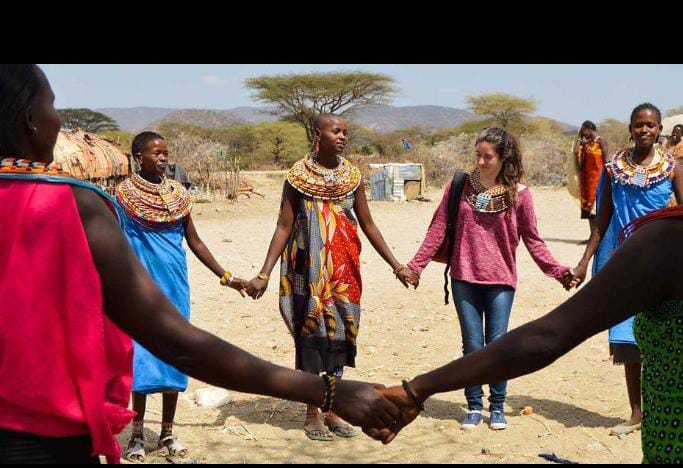
Our world is made up of people with different beliefs, cultures, experiences, abilities, opinions and circumstances. These differences are part of what makes human existence diverse. However, diversity should not become a reason for division, exclusion or disregard.
We do not have to share the same opinions to treat one another with respect. We do not have to come from the same background to show consideration. Neither do we have to understand every aspect of someone’s experience before acknowledging their right to dignity.
There is a difference between disagreement and disrespect. We can challenge ideas without attacking identities, correct mistakes without humiliating people and maintain our convictions without denying others their humanity.
Perhaps we would have fewer unnecessary conflicts if we learned to separate people from the things we disagree with about them.
Everyone Has a Story We May Never Know
One of the most important things to remember about human interactions is that we rarely have the complete picture of another person’s life.
The individual who appears withdrawn may be navigating a difficult season. The person who asks for help may have exhausted every other option. Someone who makes a mistake may be learning something we have already had the opportunity to understand.
This does not mean that accountability should be abandoned or that every behaviour should be excused. Rather, it reminds us that correction can exist without cruelty and accountability without the loss of dignity.
We should be careful not to make permanent conclusions about people based on temporary circumstances.
Sometimes, what another person needs is not for us to solve their entire problem, but to approach them without unnecessary judgement.
The Humanity We Owe One Another
A kinder society does not begin with grand declarations or occasional public gestures. It begins with the everyday decisions we make about how we treat people.
It is reflected in how we speak to those who serve us, how we respond to people who make mistakes, how we accommodate those who are different from us and how we treat people when there is nothing to gain from the interaction.
It is in recognising the cleaner as much as the executive, listening to the child as much as the adult and extending courtesy to the person who cannot repay us.
These may appear to be ordinary things, but they reveal something significant about our understanding of humanity.
We must also recognise that seeing the humanity in others does not require us to abandon our boundaries, tolerate mistreatment or compromise what is right. Respect and accountability can coexist. Kindness and justice are not opposites.
Ultimately, the goal is not to create a world where everyone thinks alike, behaves alike or lives alike. It is to create one where our differences do not prevent us from recognising one another’s worth.
A Thought to Leave With
Imagine a world where people were not treated according to what they could offer, how useful they appeared or how closely they aligned with our expectations. Imagine a society where dignity was not something people had to earn through status, wealth, influence or achievement.
Would our interactions be different? Would our communities be more welcoming? Would more people feel seen, heard and valued?
Perhaps the change we desire in the world begins with a simple but often overlooked decision: to see the person before the position, the human before the difference and the individual beyond the circumstances.
After all, before we became professionals, leaders, parents, students, employers, employees or people of influence, we were human beings.
And that should always count for something.
Because the foundation of a kinder world is the recognition that every human being matters.
Beyond Kindness. Beyond Differences. Towards a More Human World.
Foundation for World Harmony (FWH) | Kindness News Network (KNN)