
We face environmental challenges every day. News about climate change and pollution can feel overwhelming. But, we have more power than we think.
Every choice we make has a big impact. By choosing sustainable living, we help the planet and our communities. We’re making a better future for our families and joining others in taking action.
Harmony in action doesn’t mean we have to be perfect. We can make a difference with small actions every day. A mindful choice at the store or a walk in nature can make a big difference.
The United Nations says protecting our planet starts with our choices. When we make eco-friendly decisions, we create big change together. We just need to find what feels right for us and start.
In this article, we’ll look at easy ways to help the planet. We’ll see how taking care of ourselves, our communities, and the environment are all connected. We’ll learn that we can all make a difference, starting today.
Key Takeaways
- Small daily choices create meaningful planetary impact when we embrace harmony in action
- Simple ways to give back don’t require complete lifestyle changes or huge sacrifices
- Protecting our planet connects directly to our personal health and community well-being
- Environmental action is achievable for everyone, regardless of starting point or circumstances
- Sustainable living practices fit naturally into our existing routines and habits
- Individual actions collectively create the global change our world desperately needs
Understanding the “Be Fantastic” Philosophy
The Be Fantastic philosophy asks us to make our daily lives meaningful. It draws from seva, or selfless service. This means caring for others, our communities, and the planet comes from our deepest humanity.
We don’t need to make big changes to follow this philosophy. Our impact starts with the choices we make every day.
This philosophy sees our actions as ripples that spread far. When we focus on service and compassion, we create change that goes beyond us. This section looks at how this philosophy changes us and the world.
What Does It Mean to “Be Fantastic”?
Being fantastic means being kind and intentional in small ways. It’s not about being perfect or doing grand things. It’s about making choices that honor ourselves, our neighbors, and the planet.
Here are some ways to be fantastic:
- Choosing to walk or bike instead of driving benefits your health while reducing emissions
- Supporting local farmers strengthens your community while promoting sustainable agriculture
- Smiling at neighbors and learning their names creates social bonds that strengthen your entire neighborhood
- Planting native flowers beautifies your space while supporting pollinators and biodiversity
- Sharing skills or time with community members builds trust and resilience
Every choice reflects a commitment to global change. These choices are part of the same philosophy that connects personal well-being to community health.
Why It’s Important for Personal Well-Being
Research shows that acts of service and connection boost our mental health. When we act in line with our values, we feel more satisfied with life, less stressed, and have a stronger sense of purpose.
Giving back is not just noble; it makes us feel better. Studies show that volunteers are happier and healthier. Contributing to something bigger than ourselves fulfills our need for meaning and belonging.
A positive mindset grows when we see our impact creating real change. Whether it’s improving our health or building community bonds, we’re investing in ourselves while making a difference.
The Global Impact of Individual Actions
Our actions have a collective impact through the ripple effect. Imagine dropping a stone into water—the circles spread out, touching shores you didn’t expect. Your daily choices work the same way.
Planting pollinator-friendly flowers beautifies your yard and supports biodiversity. This feeds entire ecosystems and strengthens food security. Building genuine connections with neighbors makes your community more resilient. Choosing sustainable products shifts industries toward global change.
| Individual Action | Personal Well-Being Benefit | Community Impact | Global Change Contribution |
|---|---|---|---|
| Daily walking or biking | Improved cardiovascular health and mental clarity | Safer, more walkable neighborhoods | Reduced carbon emissions and cleaner air |
| Supporting local farmers | Better nutrition and food knowledge | Stronger local economy and food security | Decreased agricultural emissions and soil preservation |
| Community volunteering | Increased sense of purpose and social connection | Stronger social bonds and neighborhood cohesion | More resilient communities facing environmental challenges |
| Growing native plants | Connection to nature and stress reduction | Habitat for local wildlife and pollinators | Support for biodiversity and ecosystem health |
| Mindful consumption | Financial stability and intentional living | Reduced waste in local landfills | Decreased resource depletion and pollution |
The Be Fantastic philosophy shows that our choices matter in the big picture of global harmony. We’re not just observers; we’re active participants in creating the world we want. When we all embrace this philosophy and take action, our collective impact is clear.
“In a world where you can be anything, be fantastic—for yourself, your community, and our shared planet.”
Understanding this philosophy is the foundation of this guide. As we explore ways to live sustainably, support our communities, and nourish our well-being, remember: each action comes from this core belief. We have the power to create positive change, and that power awakens when we choose to be fantastic.
Small Changes: Big Impact on Your Health
We often see wellness and caring for the environment as separate goals. But they go hand in hand. By focusing on healthy habits and sustainability, we help ourselves and the planet. Small changes in how we eat, move, and drink water can make a big difference.
These changes are not sacrifices. They are improvements that make us feel better and help our planet.
Eating Mindfully for a Healthier You
Mindful eating is about making conscious food choices. Choosing whole, plant-based foods is good for our bodies and the environment. Shopping at local farmers markets connects us with our community and gets us fresh, nutritious food.
Meal planning helps us avoid waste, save money, and reduce stress. Eating seasonally means enjoying foods at their best while supporting local farmers. This choice also reduces our carbon footprint.
- Visit local farmers markets weekly for fresh produce
- Plan meals three days ahead to reduce food waste
- Build plates around seasonal vegetables
- Try meatless Mondays to explore plant-based options
Incorporating Exercise into Daily Life
Exercise doesn’t need to be in a gym. We can move more in our daily lives. Biking or walking to places instead of driving is good for our health and the planet.
Everyday activities like taking stairs, hiking, and gardening are great for fitness and connect us with nature. Walking around our neighborhoods helps us find local parks and paths.
| Activity | Health Benefit | Environmental Impact |
|---|---|---|
| Biking short trips | Improves cardiovascular fitness | Reduces emissions by up to 5 pounds per month |
| Walking to errands | Builds leg strength and balance | Saves fuel and reduces traffic congestion |
| Gardening or yard work | Burns 250-400 calories per hour | Grows food locally and increases green space |
| Taking stairs | Strengthens core and leg muscles | Saves electricity in buildings |
Hydration: A Simple Step to Wellness
Drinking enough water keeps us focused and energized. Our bodies need it to function well. Using a reusable water bottle is a simple way to stay hydrated and reduce plastic waste.
Choosing tap or filtered water over bottled water is better for our health, wallets, and the planet. It improves our mood and physical performance. Plus, it helps prevent plastic waste in our oceans and landfills.
“Carrying a reusable water bottle is one of the easiest ways to support your wellness practices while practicing everyday sustainability. It’s a choice that pays dividends every single day.”
Mindful eating, daily exercise, and staying hydrated are key to lasting wellness. Each one connects us to our environment and improves our health. We’re not waiting for perfection. We’re choosing progress and building healthy habits for ourselves and our world.
Supporting Your Neighbors and Community
In today’s world, we often feel alone, even when we’re connected online. To build strong neighborhood ties, we must choose to invest in our local communities. By doing so, we create places where everyone feels valued and supported.
These connections spread out, making our neighborhoods better for everyone. They turn into places where people can thrive together.

Together, we can make a big difference by supporting our communities. We don’t need to do big things or spend a lot of time. Small, regular actions can make a big impact.
These actions help build strong, thriving neighborhoods. In these places, kindness becomes the norm.
The Power of Local Initiatives
Choosing to shop at local stores instead of online helps our neighbors. It creates spaces for our community to come together. Local businesses boost our economy and help the environment by reducing travel.
Community gardens and tool libraries are great examples. They help us use less and connect more. These efforts meet real needs and are made by people who know our community best.
- Shop at local farmers markets and neighborhood businesses
- Join community gardens or start one in your area
- Participate in tool-sharing or book-swapping programs
- Attend local community meetings and events
- Support neighborhood nonprofits and organizations
Volunteering at Community Events
Volunteering can be as simple as cleaning up a park on a Saturday. It’s a chance to meet neighbors and improve our shared spaces. We’re showing others how to care for our environment.
Volunteering means different things to different people. Some help at food banks or animal shelters. Others use their skills to help nonprofits. We can also organize events or attend community meetings.
| Volunteer Activity | Time Commitment | Skills Needed | Community Impact |
|---|---|---|---|
| Park or Beach Cleanup | 2-3 hours | Physical activity | Cleaner neighborhood, environmental awareness |
| Food Bank Assistance | 2-4 hours | Organization, teamwork | Food security for neighbors in need |
| Animal Shelter Support | 2-3 hours | Animal care, compassion | Healthier animals, community connection |
| Professional Skills Sharing | Flexible | Accounting, social media, writing | Nonprofit growth, neighborhood support |
| Community Event Participation | 2-4 hours | Social interaction | Stronger neighborhood bonds |
Simple Acts of Kindness Towards Neighbors
We build community through small moments. Putting the grocery cart back or sharing a kind word can make a big difference. These actions show we care about each other.
Starting a Little Free Library or being polite to service workers shows we value our community. Looking up from our phones and acknowledging others helps fight loneliness. We’re making neighborhoods where people look out for each other.
Small acts of kindness turn our streets into welcoming places. Sharing items or produce strengthens our bonds. These actions say: “I see you. I care about our community together.”
- Smile and greet neighbors during daily walks
- Hold doors open for people behind you
- Create a Little Free Library or community shelf
- Share garden vegetables with neighbors
- Check on elderly or homebound neighbors regularly
- Offer genuine compliments freely
- Help neighbors with yard work or errands
- Participate in neighborhood online groups
Building community support is easy. We start with what we have. Each act of kindness helps connect us. Together, we’re making neighborhoods where harmony starts at home and spreads out to touch everyone.
Eco-Friendly Living Made Easy
Living eco-friendly doesn’t mean we have to be perfect. We can start by making small, easy choices every day. These choices add up and make a big difference.
Easy Ways to Reduce Your Carbon Footprint
Reducing our carbon footprint is simple. For example, using LED bulbs in our homes is a big help. They use less energy and last longer than old bulbs.
Here are some easy ways to help the planet:
- Replace old bulbs with energy-saving LEDs
- Adjust your thermostat to save on heating and cooling
- Turn off devices when not in use
- Walk or bike for short trips
- Carpool or combine errands
- Order online to cut down on delivery emissions
- Choose products with less packaging
These changes can save us money and help the environment. By using less energy, we can lower our bills over time.
Starting a Home Garden for Sustainability
Starting a garden is a great way to live sustainably, even with little space. We can grow herbs indoors or vegetables in containers. This way, we get fresh food without harming the environment.
Gardening has many benefits:
| Gardening Benefit | Impact on Sustainability | Personal Well-Being |
|---|---|---|
| Growing our own food | Eliminates transportation emissions | Reduces stress and anxiety |
| Planting pollinator-friendly flowers | Supports bee and butterfly populations | Creates beautiful, vibrant spaces |
| Sharing surplus with neighbors | Builds community and reduces waste | Strengthens local connections |
| Growing trees for oxygen production | Combats climate change and cleans air | Provides shade and natural cooling |
| Using non-toxic gardening methods | Prevents chemical runoff and contamination | Creates safer outdoor environments |
Even small gardens can help our communities. Sharing food with neighbors is a great way to build connections and reduce waste.
The Benefits of Recycling and Upcycling
Recycling is key to reducing waste. But we need to know what our local recycling programs accept. This helps us recycle more effectively.
Upcycling gives old items a new life:
- Glass jars become storage containers and decorations
- Old t-shirts become cleaning rags and craft materials
- Wooden pallets become garden planters or furniture
- Furniture gets a new look through painting and refinishing
- Plastic bags become stuffing for pillows or craft projects
We can support recycling by buying less and choosing durable items. Sharing items with neighbors helps keep useful goods in circulation.
Using reusable bags, bottles, and utensils reduces plastic waste. Saving water helps our local ecosystems and prevents pollution.
Eco-friendly living is about making choices that align with our values. Every action we take helps create a better future for all of us.
Connecting with Nature
Many of us spend our days staring at screens, missing the world around us. We’ve lost touch with nature’s rhythms and beauty. This disconnection harms our mental health and our desire to protect the environment.
Building a strong connection with nature changes how we see the world. It makes us care more for our planet. Simple activities like nature walks, outdoor mindfulness, and gardening can help us reconnect.
These activities boost our well-being and inspire us to protect the planet. Let’s explore three powerful ways to deepen your relationship with nature.
Nature Walks: Inviting Calm into Your Life
Nature walks are a simple yet effective way to find calm. Whether in a park or on your street, these walks are like meditation. They reduce stress, improve mood, boost creativity, and offer gentle exercise.
Walking for 20 minutes three times a week changes us. We notice details we’ve missed before. We see wildlife and seasonal changes. These moments turn into meaningful relationships with nature.
Try these simple nature walk practices:
- Walk the same route regularly to notice seasonal changes and wildlife patterns
- Leave your phone in your pocket to stay fully present
- Walk without a destination, allowing yourself to explore and wander
- Stop occasionally to listen to the layers of sound around you
- Notice colors, textures, and movements in your surroundings
Practicing Mindfulness Outdoors
Outdoor mindfulness is simple. It’s about focusing on what you’re experiencing right now. It deepens our connection to nature and calms our minds.
Start with these accessible practices:
| Mindfulness Practice | How to Do It | Benefits |
|---|---|---|
| Sensory Listening | Sit outside and identify layers of sound: birds, wind, distant traffic, rustling leaves | Develops focus and awareness of life around you |
| Texture Exploration | Touch tree bark, leaves, grass, and soil with intention and curiosity | Grounds you in the present moment and nature’s details |
| Cloud Watching | Observe clouds shifting shapes or watch water moving in streams or puddles | Brings perspective and calms racing thoughts |
| Gratitude Practice | Give thanks for natural elements: fresh air, sunlight, rain, and growing things | Shifts perspective toward appreciation and stewardship |
| Grounding Exercise | Stand barefoot on grass or soil and feel your connection to the earth | Reduces anxiety and increases feelings of belonging |
These practices show we’re not separate from nature. When we experience nature mindfully, we want to protect it. We become better stewards of the planet.
The Joy of Gardening and Its Benefits
Gardening offers many benefits beyond growing food. It grounds us and connects us to natural cycles. Nurturing plants gives us purpose and satisfaction.
You don’t need a big space or knowledge to enjoy gardening. Even a few pots of herbs teach patience and the importance of soil and water. As plants grow, we see wildlife visiting our gardens. We learn about the seasons.
Gardens transform our relationship with the earth. We see how rain and sunlight nourish life. These lessons inspire us to protect nature beyond our gardens.
Simple ways to start gardening:
- Plant herbs in windowsill containers for fresh flavor and learning
- Grow vegetables in raised beds or ground space
- Create a pollinator garden with native flowers that attract bees and butterflies
- Start a compost bin to reduce waste and enrich your soil
- Tend to tree saplings or flowering shrubs for long-term environmental impact
“To plant a garden is to believe in tomorrow.” – Audrey Hepburn
Nature connection and outdoor mindfulness are for everyone. They’re available in city parks, backyard patches, and the sky. Regularly engaging with nature transforms us and our impact on the world. Our love for nature grows naturally from genuine connection.
Advocating for Sustainable Practices
Every choice we make matters for the planet. Buying things is like voting for the world we want. We don’t need to be experts to make a difference. We can all help by choosing sustainable options and supporting local farmers.
Being an environmental advocate means caring for both people and the planet. It starts with knowing how our choices affect the world. We can make a big impact by buying local and choosing sustainable products.
Supporting Local Farmers and Artisans
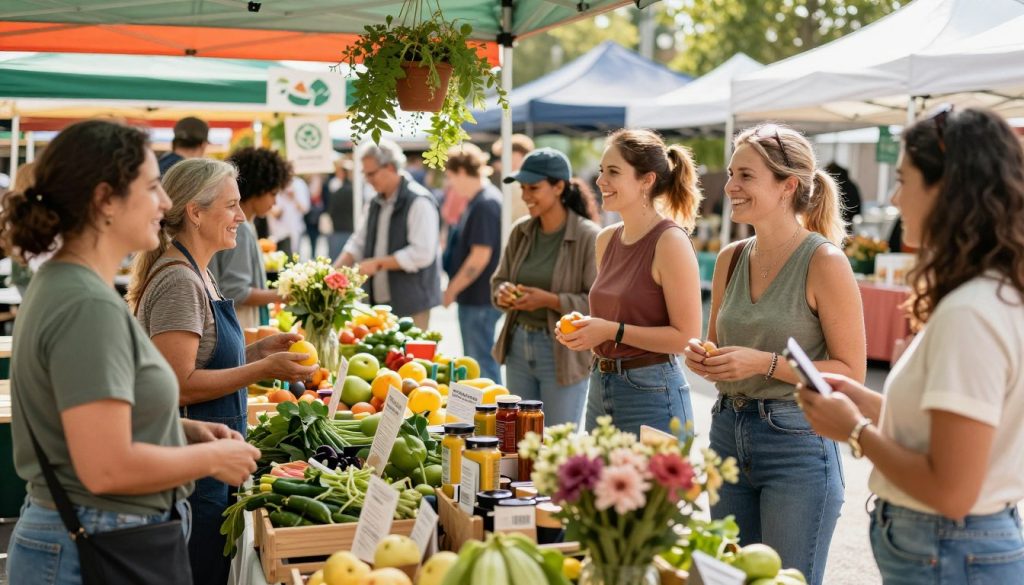
Buying from local farmers is a powerful way to help the environment. Shopping at farmers markets or joining CSAs supports small farms. These farms focus on healthy soil and biodiversity, giving us fresh, nutritious food.
Buying local has many benefits:
- It cuts down on transportation emissions
- Food is fresher and tastes better
- We support our community
- It helps our local economy
- We can learn about how food is grown
- It teaches us about seasonal eating
Buying from local artisans helps our community and the planet. These craftspeople make durable items with care. Their work stands out from cheap, disposable products.
Choosing Eco-Conscious Products
Choosing eco-friendly products is easy. Start with small steps, like cleaning supplies or bags. This way, we can make a big difference over time.
Here are some tips for buying green:
| Product Category | Eco-Conscious Choice | Environmental Benefit |
|---|---|---|
| Cleaning Products | Plant-based, non-toxic formulas | Protects waterways and aquatic life |
| Shopping Bags | Reusable canvas or cloth options | Reduces plastic waste in landfills |
| Personal Care | Sustainable, minimal-packaging items | Decreases packaging waste |
| Clothing | Durable fabrics from ethical brands | Reduces fast fashion waste |
| Food Packaging | Products in recyclable containers | Lowers landfill contributions |
When buying big items, look into the company’s environmental efforts. Choose items that last and can be fixed. Our choices help companies make more eco-friendly products.
Spreading Awareness About Environmental Issues
Sharing what we know about the environment is key. Be genuine and encouraging, not judgmental. Learning and sharing with others is powerful.
Here’s how to spread the word:
- Share your own green choices
- Explain why you care
- Invite others to join you
- Support and celebrate others’ efforts
- Post about your green choices online
- Follow trusted environmental groups
“When we bring reusable bags because we’ve seen ocean plastic impacts, or try meatless Mondays after learning about agriculture’s climate footprint, we invite curiosity.”
Be humble in our environmental efforts. We’re all learning together. By being kind and enthusiastic, we inspire others to join us in making a difference.
The Ripple Effect of Kindness
When we toss a stone into water, it creates circles that spread far. Our kindness and choices do the same. Each choice we make affects those around us. We inspire change in ways we may never see.
This effect grows, creating a kindness movement that changes communities. By sharing our stories, we make a bigger impact than we could alone.
Sharing Your “Be Fantastic” Moments
Our choices tell a powerful story. Sharing photos of our farmers market finds or our container gardens inspires others. Real moments connect with real people.
Sharing means showing both our successes and lessons. Talking about our reusable coffee cups might inspire others to try. In-person talks plant seeds for new habits.
Inspiring Others to Join the Movement
People are drawn to enthusiasm, not guilt. When we enjoy our sustainable choices, others want to too. We inspire change with simple invitations:
- Organize group activities like community cleanups or farmers market trips
- Start challenges such as plastic-free month or bike-to-work week
- Create community resources like tool libraries or free boxes
- Share your genuine excitement about sustainable living
Everyone’s journey is different. Our role is to encourage and support, not judge. By showing sustainable living as joyful, we prove change is possible for all.
Celebrating Community Efforts Together
Community celebration strengthens our spirit. Recognizing our achievements together fuels lasting action. Celebrating milestones creates momentum:
| Community Celebration Types | Impact on Movement |
|---|---|
| Acknowledging volunteers and organizers | Recognizes individual contributions and motivates continued service |
| Celebrating first harvests or collected totals | Marks tangible progress and builds collective pride |
| Organizing potlucks or gatherings | Strengthens social bonds that sustain programs |
| Thanking neighbors who participate | Creates positive associations with community action |
A neighborhood potluck celebrating a compost program does more than mark time. It strengthens relationships and recognizes everyone’s efforts. It builds positive feelings that keep people involved. Celebration fuels our continued effort.
Remember, none of us is too small to make a difference. Together, our individual efforts become waves that change communities and inspire movements.
Building Globally Conscious Connections
Joining movements beyond our neighborhoods is powerful. We become part of a global network of changemakers. Knowing millions share our goals gives us courage and inspiration.
Our actions gain meaning in an eco-conscious community. We find support locally, online, or through travel. This strengthens our resolve and increases our impact.
Finding Support Groups in Your Community
Starting with local environmental groups gives us immediate support. These groups offer face-to-face encouragement and shared experiences. Joining a group gives us access to collective wisdom.
Try these ways to find groups in your area:
- Visit your local community center or library for posted group information
- Search social media platforms for local sustainability and environmental groups
- Attend city council meetings or environmental forums in your town
- Contact nearby environmental nonprofits to learn about their activities
- Start your own group with interested neighbors if none exists
These groups combat isolation and provide practical resources and emotional support. They make our commitment sustainable.
Online Platforms for Global Changemakers
Digital tools connect us worldwide. The United Nations offers platforms for logging environmental actions and connecting with global efforts. Online communities bring together people from every continent.
Online platforms offer unique advantages:
- Learn from people facing similar challenges
- Share your experiences and inspire others
- Find inspiration during tough times
- Access online courses and webinars
- Recognize you’re part of a worldwide movement
Use these platforms for learning and connection, not just scrolling. Remember, in-person community is also valuable.
Touring Eco-Friendly Destinations
Sustainable travel expands our awareness and supports conservation worldwide. Choosing eco-tourism thoughtfully protects natural spaces and local cultures. We build real global connections through meaningful experiences.
Consider these sustainable travel practices:
- Select destinations and tour operators committed to conservation
- Travel less frequently but more meaningfully
- Choose closer destinations to reduce flight emissions
- Use public transportation and walk when exploring
- Stay in locally-owned accommodations
- Be a respectful observer and learner in communities you visit
Visiting eco-tourism projects transforms abstract issues into reality. You’re funding conservation, learning practices, and building connections. Offset carbon from air travel when possible, and remember quality experiences are more important than quantity.
Kindness Challenge: Take Action Today!
The time to start is now. We don’t need a perfect plan or to feel fully ready. The “Be Fantastic” philosophy shines when we take our first step. Every day, we can choose to do something kind, starting today.
Our commitment to act leads to real change. It makes a difference in our lives and communities.
Simple Steps You Can Take Right Now
Choose one action that feels good and easy for you today. Pick something that excites you and fits into your schedule. For health, try a short nature walk, drink more water, or cook a meal with local ingredients.
These small steps support our health and build good habits.
For connecting with others, text three friends or give compliments to people you meet. Smile and say hello to five neighbors or strangers, or hold the door for someone. These acts of kindness strengthen our bonds with others.
For the environment, bring a reusable bag or switch to LED bulbs. Start researching local farmers markets or plant a pollinator-friendly plant. Turning off lights and unplugging unused devices also helps. Every action we take is part of a larger movement for well-being, connection, and the planet.
Sharing Your Experience with Others
After completing the challenge, share what you did. Sharing makes us accountable and inspires others. Post on social media with hashtags like #BeFantasticChallenge or #HarmonyInAction. Tell a friend or family member about your action and why you chose it.
Journaling about your experience can also help. Sharing our actions helps us process and builds community with like-minded individuals.
Sharing isn’t about seeking validation. It’s about joining a movement of people who care about harmony. When we share, we show others that sustainability is possible and rewarding.
Encouraging Others to Join You in the Challenge
Now, invite others to join this journey. Ask friends or family to do the challenge with you. Share this article with someone who might be interested. Suggest the challenge to your workplace or community group.
Model the behavior yourself and answer questions when asked. The best invitations are those without pressure. Share what excited you about the challenge and the results you’ve seen. Give others space to respond in their own time.
Every person who joins us increases our positive impact. Harmony isn’t built by a few doing everything perfectly. It’s built by millions of us doing small things with intention. Every reusable bag, every nature walk, every kind word, every local purchase, every planted seed contributes to the world we’re building together. Thank you for your commitment to take action. It takes courage to care deeply in challenging times. Together, we’re creating the harmony we wish to see. Let’s start today. Let’s be fantastic together.